
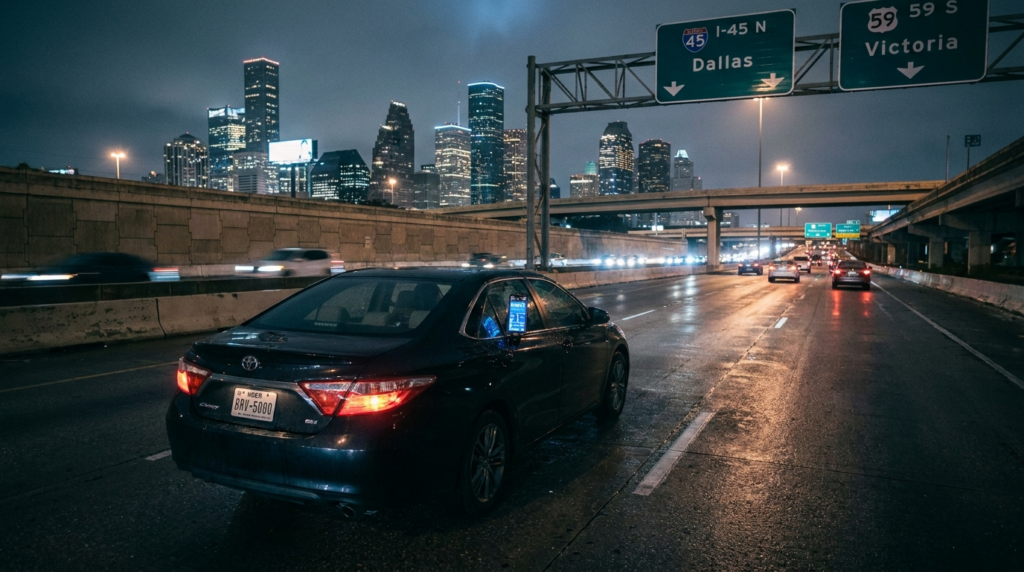
Every day in Houston, thousands of people rely on Uber and Lyft to get where they need to go. Most rides go smoothly. But when a rideshare driver causes a crash, victims often discover a maze of overlapping insurance policies and a company unwilling to take responsibility. Understanding how Texas law governs these situations is the first step to protecting your rights.
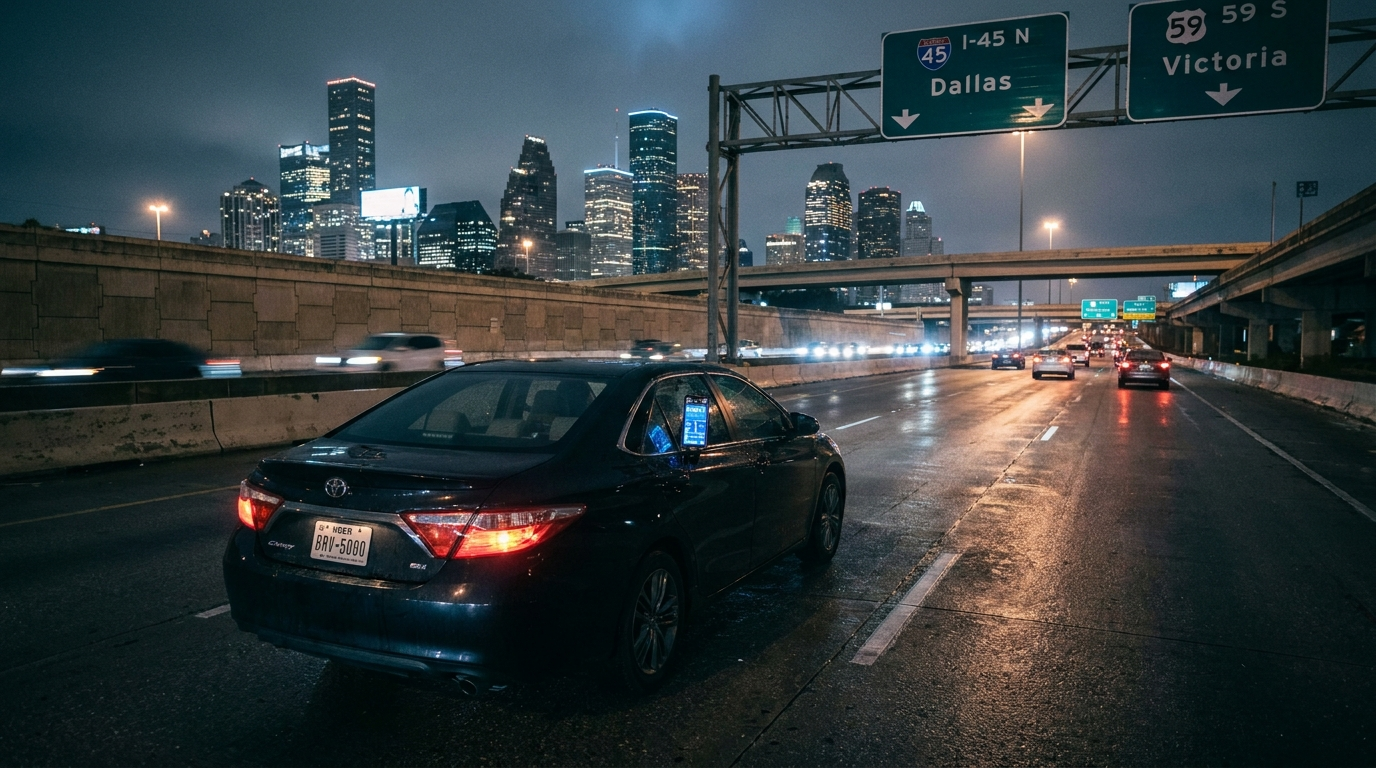
The 3-Phase Rideshare Insurance System in Texas
Whether Uber or Lyft’s insurance applies — and how much — depends entirely on the driver’s app status at the moment of the crash. Texas regulates Transportation Network Companies (TNCs) under Tex. Transp. Code Ch. 2402, which establishes three distinct coverage phases:
Phase 1 — App Off
The driver is using their personal vehicle with no rideshare app active. Uber and Lyft’s insurance does not apply. The driver’s personal auto policy is the only coverage available. Many personal policies exclude commercial use, creating coverage gaps that leave victims undercompensated.
Phase 2 — App On, Waiting for a Ride Request
The driver is logged in and available but has not yet accepted a trip. TNC contingent liability coverage applies: at minimum $50,000 per person / $100,000 per accident for bodily injury, and $25,000 for property damage. This coverage only applies if the driver’s personal insurance does not cover the claim. The TNC’s own policy provides contingent protection.
Phase 3 — Ride Accepted Through Passenger Drop-Off
From the moment a driver accepts a trip until the passenger exits the vehicle, the TNC must maintain at least $1 million in third-party liability and $1 million in uninsured/underinsured motorist coverage. This is the highest level of protection and covers both passengers and other motorists injured by the rideshare driver.
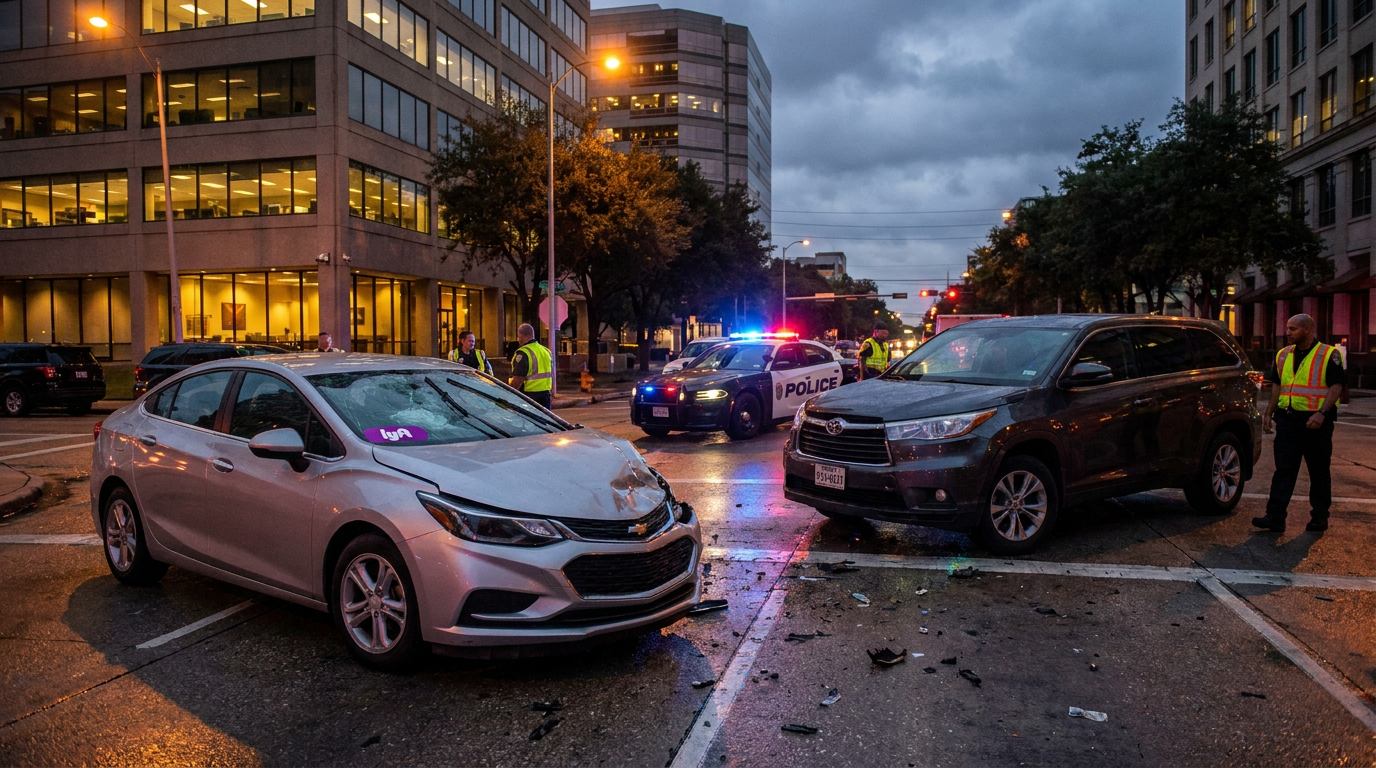
Who Can Be Liable in a Texas Rideshare Accident?
Rideshare accident cases often involve multiple potential defendants:
- The rideshare driver: For negligent driving — speeding, distracted driving, running red lights, fatigued driving from working multiple platforms simultaneously.
- The TNC (Uber or Lyft): For their insurance obligations under Texas law, and in some cases for negligent retention of a driver with a dangerous history.
- Another at-fault driver: If a third-party vehicle caused or contributed to the crash, that driver and their insurer are also potentially liable — and the TNC’s UM/UIM coverage provides a backstop if that driver is uninsured.
The Independent Contractor Defense — and Its Limits
Uber and Lyft aggressively argue their drivers are independent contractors, not employees, to avoid direct liability for driver negligence. Courts have generally accepted this in Texas for most claims. However, this defense does not eliminate the insurance obligations under Tex. Transp. Code Ch. 2402 — those apply regardless of employment classification. And in cases where the company was negligent in screening or retaining a driver with known safety issues, a direct negligence claim may still be viable.
What to Do After a Texas Rideshare Accident
- Call 911. Get police and medical response to the scene.
- Screenshot your trip immediately. Before closing the app, screenshot the active trip — driver name, vehicle, trip ID, and route. This establishes the app was active and the phase of coverage.
- Photograph everything. Vehicles, license plates, injuries, road conditions, traffic signals.
- Get witness information. Other passengers, bystanders, nearby drivers.
- Report in the app. Both Uber and Lyft have in-app incident reporting — use it.
- Seek medical treatment immediately, even if you feel okay. Many serious injuries — whiplash, concussions, internal injuries — are not immediately apparent.
- Contact an attorney before giving any statements to the TNC’s insurance company. Their adjusters are experienced at minimizing claims.
Frequently Asked Questions
Yes — when you are an active passenger in an Uber or Lyft vehicle (Phase 3), Texas law requires the TNC to maintain at least $1 million in third-party liability coverage and $1 million in uninsured/underinsured motorist coverage. This applies from the moment you enter the vehicle until you exit. Under Tex. Transp. Code Ch. 2402, both Uber and Lyft are required to maintain these minimums.
If the driver’s rideshare app was completely off — meaning they were not logged in as a driver — then Uber or Lyft’s insurance does not apply at all. You would only have access to the driver’s personal auto insurance policy. This is why documenting the driver’s app status immediately after the accident is critical. Screenshots, witnesses, and the rideshare company’s own trip records can establish this.
Both Uber and Lyft classify their drivers as independent contractors, not employees, which limits their direct liability for the driver’s negligence. However, you can still file a claim against their insurance policy, and in some cases — such as when the company was negligent in retaining an unfit driver — a direct negligence claim against the company may be viable. An attorney can evaluate all available defendants in your specific case.
Texas gives you two years from the date of the accident to file a personal injury lawsuit under Tex. Civ. Prac. & Rem. Code § 16.003. Missing this deadline permanently bars your claim against all defendants — the driver, the TNC, and any other responsible party. Do not wait to consult an attorney.
Call 911 and get medical treatment even if you feel fine. Screenshot your rideshare trip in the app before closing it — this captures the trip ID, driver name, and route. Photograph all vehicles, road conditions, and any visible injuries. Get witness contact information. Report the accident inside the app. Do NOT give a recorded statement to any insurance company before speaking with an attorney — TNC insurers are experienced at minimizing these claims.
Sources & Further Reading
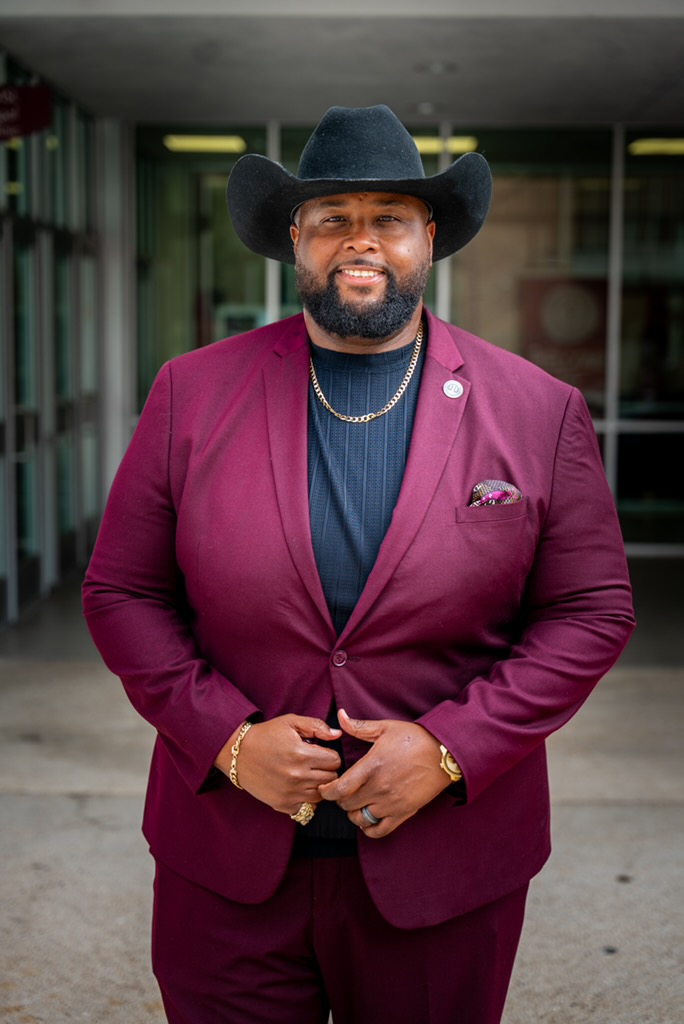
Your Houston Personal Injury Attorney
BJ Kemp
Texas State Bar #24116608 · Texas Legal Giants · Houston, TX
BJ Kemp has built Texas Legal Giants on a simple promise: Big Commitment. Giant Results. He handles personal injury cases throughout greater Houston — car accidents, truck accidents, wrongful death, and more — and fights to get accident victims the maximum settlement they deserve, not the quickest one the insurance company offers.