
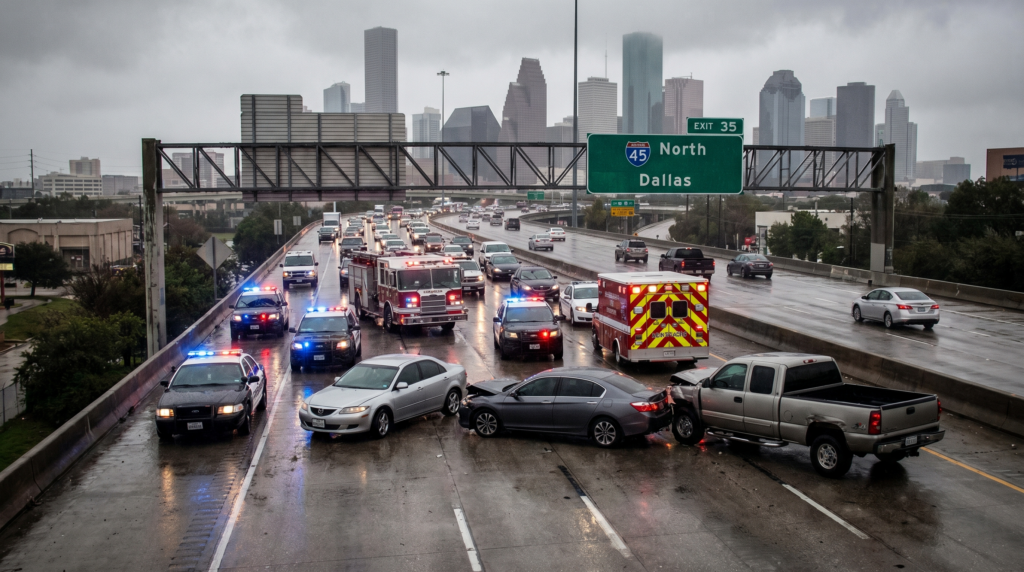
Distracted Driving Accident in Texas: How to Prove the Other Driver Was on Their Phone
If another driver was on their phone when they hit you, you have the right to demand their phone records — and Texas law gives you powerful tools to get them. Proving distracted driving is the most critical step in recovering full compensation, and it starts with the actions you take in the hours and days after the crash.
Texas Distracted Driving Law: What Applies to Your Case
Texas Transportation Code § 545.4251 banned statewide handheld phone use while driving in 2017. A driver who texts, emails, or uses a hand-held device while operating a vehicle is breaking the law. In a personal injury case, that violation is evidence of negligence per se — meaning the law itself establishes the duty they breached. In addition to the statewide ban, Houston and Harris County have had distracted driving ordinances since 2014, creating a second layer of liability for crashes in the metro area.
Key facts about distracted driving in Texas:
- Texting while driving increases crash risk by 23 times compared to undistracted driving (Virginia Tech Transportation Institute)
- In 2022, distracted driving was a contributing factor in 94,199 crashes across Texas — resulting in 344 deaths and 2,253 serious injuries (TxDOT)
- A first-time violation of Texas § 545.4251 carries a fine of $25–$99; a violation that causes serious injury or death carries up to $4,000
- The fine matters less than the civil liability — a distracted driver who caused your injuries can be sued for medical costs, lost wages, pain and suffering, and more

5 Types of Evidence That Prove the Other Driver Was on Their Phone
Insurance companies rarely admit their policyholder was distracted without evidence. Here is what can prove it:
1. Phone Records via Subpoena
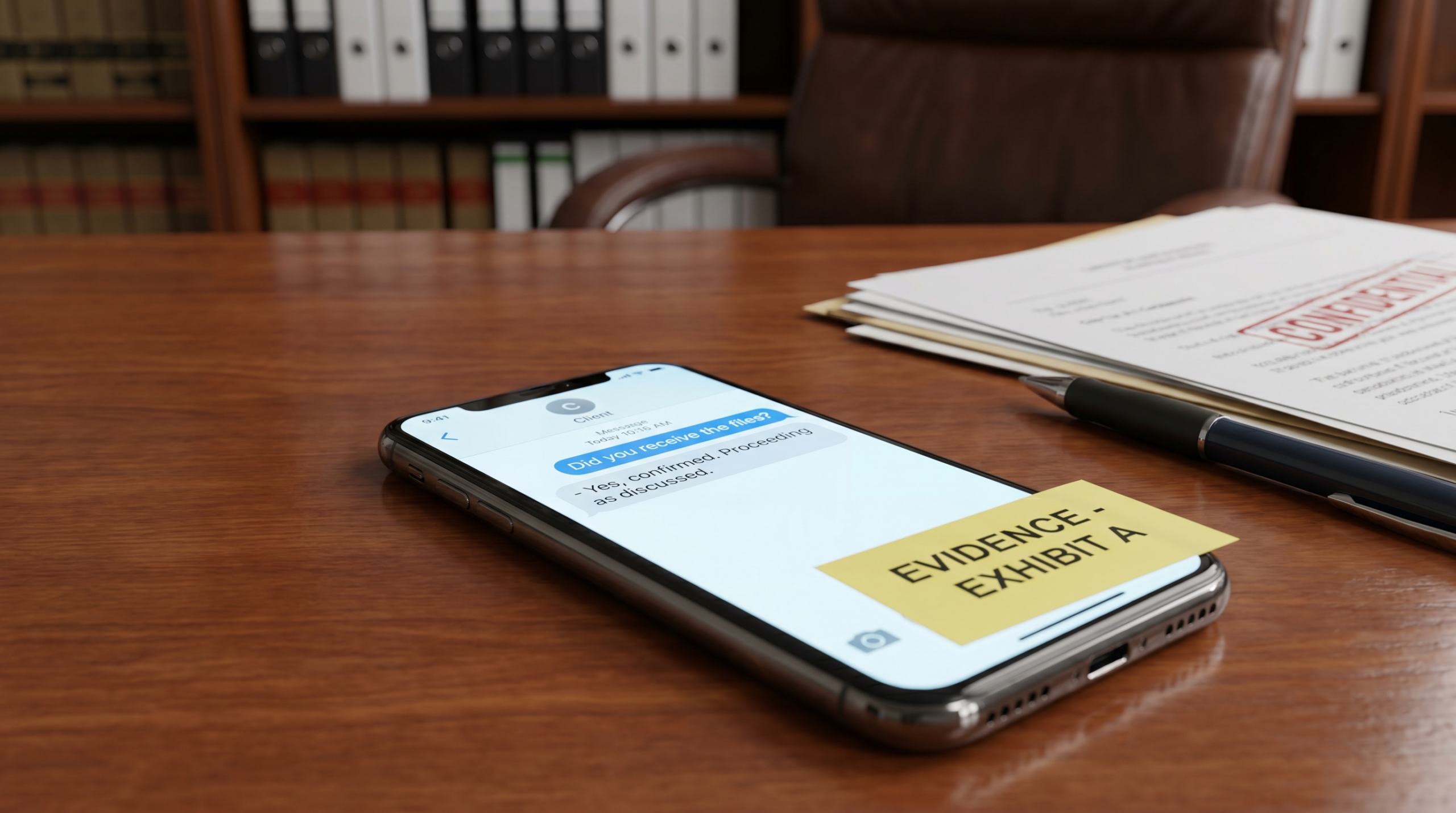
Your attorney can subpoena the at-fault driver’s cell carrier records. These records show the exact timestamp of calls, texts, and data usage — if a text was sent at 2:14 PM and the crash occurred at 2:14 PM, that is direct evidence. Courts routinely compel carriers to produce these records in personal injury litigation. This is the single strongest category of evidence.
2. Witness Statements
Bystanders who saw the driver looking down or holding a phone before impact are valuable witnesses. Collect names and phone numbers at the scene. If a witness tells police they saw the driver on their phone, that statement gets documented in the crash report.
3. Police Report Notations
When you call 911, officers investigate the crash. If they observe evidence of phone use — a phone unlocked on the seat, witness reports, or the driver’s own admissions — they note it. Always get a copy of the full crash report (available from TxDOT within 10 days at txdot.gov).
4. Dashcam and Traffic Camera Footage
Your own dashcam may have captured the other vehicle before impact. Traffic cameras, business security cameras, and intersection cameras along the route can show the driver’s head position or visible phone use. This footage must be requested quickly — many systems overwrite after 30–72 hours.
5. Social Media and App Activity
If the driver posted to Instagram, sent a Snapchat, or was active on any app at the time of the crash, that data is discoverable. Facebook and Instagram timestamps can be cross-referenced with the crash time. Your attorney can request this through discovery.
What to Do at the Scene to Protect Your Case
- Call 911 immediately — get a police report on record, even for crashes that seem minor
- Tell the officer you believe the driver was on their phone — this gets documented and can prompt the officer to ask the driver about device use
- Note the time of impact precisely — phone records are matched to the minute
- Photograph the other driver’s phone if visible — if it is unlocked and on the seat, photograph it from where you are standing
- Get witness names and numbers — witnesses leave, memories fade; capture them before anyone disperses
- Do not post on social media — insurance companies monitor plaintiff social media activity
Injured by a Distracted Driver in Texas?
BJ Kemp handles distracted driving cases across Houston and Texas. Your consultation is free and you pay nothing unless we win.
(346) 971-7333 — Free Case ReviewHow Much Is a Distracted Driving Accident Case Worth in Texas?
Texas is an at-fault state with modified comparative negligence under Civil Practice and Remedies Code § 33.001. You can recover damages as long as you are not more than 51% at fault. Distracted driving cases where phone use is proven typically result in stronger settlements because liability is clear and insurance carriers prefer to settle before phone records are subpoenaed in litigation.
- Medical bills: Emergency care, surgery, physical therapy, future treatment — all documented costs
- Lost wages: Income lost during recovery, including self-employment income with proper documentation
- Pain and suffering: Texas allows non-economic damages with no statutory cap in most personal injury cases
- Property damage: Vehicle repair or replacement at current market value
- Punitive damages: In cases of gross negligence, Texas CPRC Ch. 41 allows exemplary damages up to 2x economic damages plus $750,000
Why Distracted Driving Cases Require an Attorney
Insurance adjusters are trained to minimize payouts. In distracted driving cases, they will argue that you cannot prove phone use without records — and then oppose the subpoena that would get those records. An experienced Texas personal injury attorney knows how to compel phone carrier records, preserve camera footage within the 72-hour window, and build the timeline that connects device activity to the moment of impact.
Frequently Asked Questions
Yes. Through civil discovery, your attorney can subpoena the at-fault driver’s cell carrier for call logs, text timestamps, and data usage records. Courts routinely compel carriers including AT&T, Verizon, and T-Mobile to produce these records. The records are matched to the exact minute of the crash.
Yes. Texas Transportation Code § 545.4251 bans all handheld electronic device use while driving statewide. The fine is $25–$99 for a first offense and up to $4,000 if the violation causes serious injury or death. In a civil case, this violation is evidence of negligence per se.
Witness testimony is one of five evidence types available. Even without witnesses, phone records, traffic camera footage, business security cameras, and social media activity can establish phone use at the time of impact. An accident reconstructionist can also establish fault through physical evidence alone.
Texas Civil Practice and Remedies Code § 16.003 sets a 2-year statute of limitations for personal injury claims. The clock starts on the date of the crash. Missing this deadline permanently bars your claim. Camera footage often disappears within 72 hours, so acting quickly preserves the most time-sensitive evidence.
Value depends on injury severity, medical costs, lost income, and liability clarity. When phone records confirm distracted driving, liability is strong and settlements are typically higher than disputed-fault cases. Texas allows medical bills, lost wages, pain and suffering, and punitive damages up to 2x economic damages plus $750,000 under CPRC Ch. 41.
Sources & Further Reading

Your Houston Distracted Driving Attorney
BJ Kemp
Texas State Bar #24116608 · Texas Legal Giants · Houston, TX
BJ Kemp has handled distracted driving cases across Houston and Texas, including cases where phone records proved liability that insurance companies refused to acknowledge. He knows how to preserve digital evidence quickly and build the timeline that connects a driver’s phone activity to the moment of impact.
(346) 971–7333 — Free Case Review