
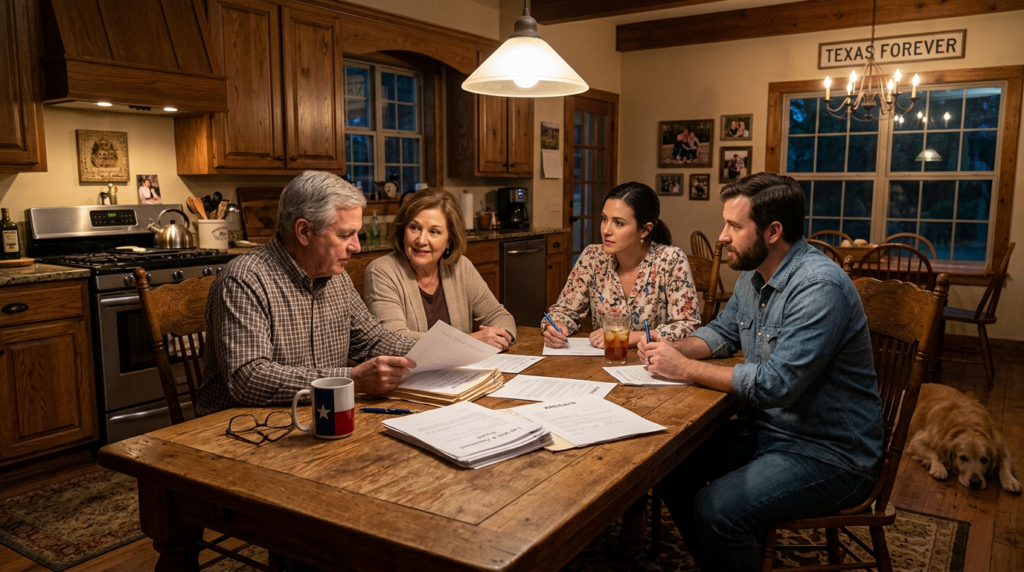
Making a valid will in Texas requires meeting specific legal requirements — and skipping any of them can render the document unenforceable in probate court. A typed will needs two witnesses; a handwritten will needs none but must be entirely in your own handwriting. Without a valid will, Texas law — not you — decides what happens to everything you own.
The good news: creating a will in Texas is straightforward when you understand the rules. Here is what Texas law requires and what to include to make sure your wishes are carried out.
Texas Will Requirements: 2 Types, Different Rules
Texas recognizes two types of valid wills, each with distinct requirements under the Texas Estates Code Chapter 251:
Formal (Attested) Will — § 251.051:
- Must be in writing (typed or printed)
- Signed by the testator, or by someone else in the testator’s presence and at their direction
- Witnessed by at least 2 credible witnesses who are 14 years or older
- Witnesses must sign in the testator’s presence
- Notarization is not required but is strongly recommended (makes the will “self-proved,” simplifying probate)
Holographic Will — § 251.052:
- Must be entirely handwritten by the testator — every word, not just the signature
- Must be signed by the testator
- Requires no witnesses and no notarization
- Riskier: if any portion is typed or pre-printed, the entire will may fail
Both types are legally valid in Texas, but formal wills drafted by an attorney — and made self-proved with a notary — are far easier to admit to probate and far harder to challenge.
What to Include in Your Texas Will: 5 Essential Provisions
A well-drafted Texas will should address at minimum:
- Identification of the testator — your full legal name, address, and a clear statement that this is your will and revokes all prior wills
- Executor designation — the person you name to manage your estate, pay debts, and distribute assets; an independent executor under Texas law can act without ongoing court supervision
- Beneficiary designations — who receives what; be specific about percentages, dollar amounts, or specific property to avoid disputes
- Guardian designation for minor children — if you have children under 18, naming a guardian in your will is the only way to formally express your preference; without it, a court decides
- Contingency provisions — what happens if a primary beneficiary dies before you; naming alternates prevents assets from falling into intestacy
What Happens If You Die Without a Will in Texas
Dying without a valid will — called dying “intestate” — means Texas law determines who inherits your property under Texas Estates Code Chapter 201. The result often surprises families:
- Community property (assets acquired during marriage): your spouse inherits your half — but only if you have no children from a prior relationship; otherwise, your children from prior relationships inherit your community property share, not your current spouse
- Separate property: split between your spouse, children, and possibly your parents and siblings, depending on who survives you
- Unmarried partners: receive nothing under Texas intestacy law, regardless of how long you were together
- Stepchildren and non-adopted children: receive nothing unless legally adopted
Intestate estates also require a court-appointed administrator rather than a chosen executor — adding court oversight, cost, and delay to the process. Intestate estates in Texas take an average of 6–12 months longer to resolve than estates with a properly drafted will.
Ready to Create Your Texas Will?
BJ Kemp offers flat-fee estate planning consultations. Get your will, powers of attorney, and advance directive done right the first time.
(346) 971–7333 — Call Now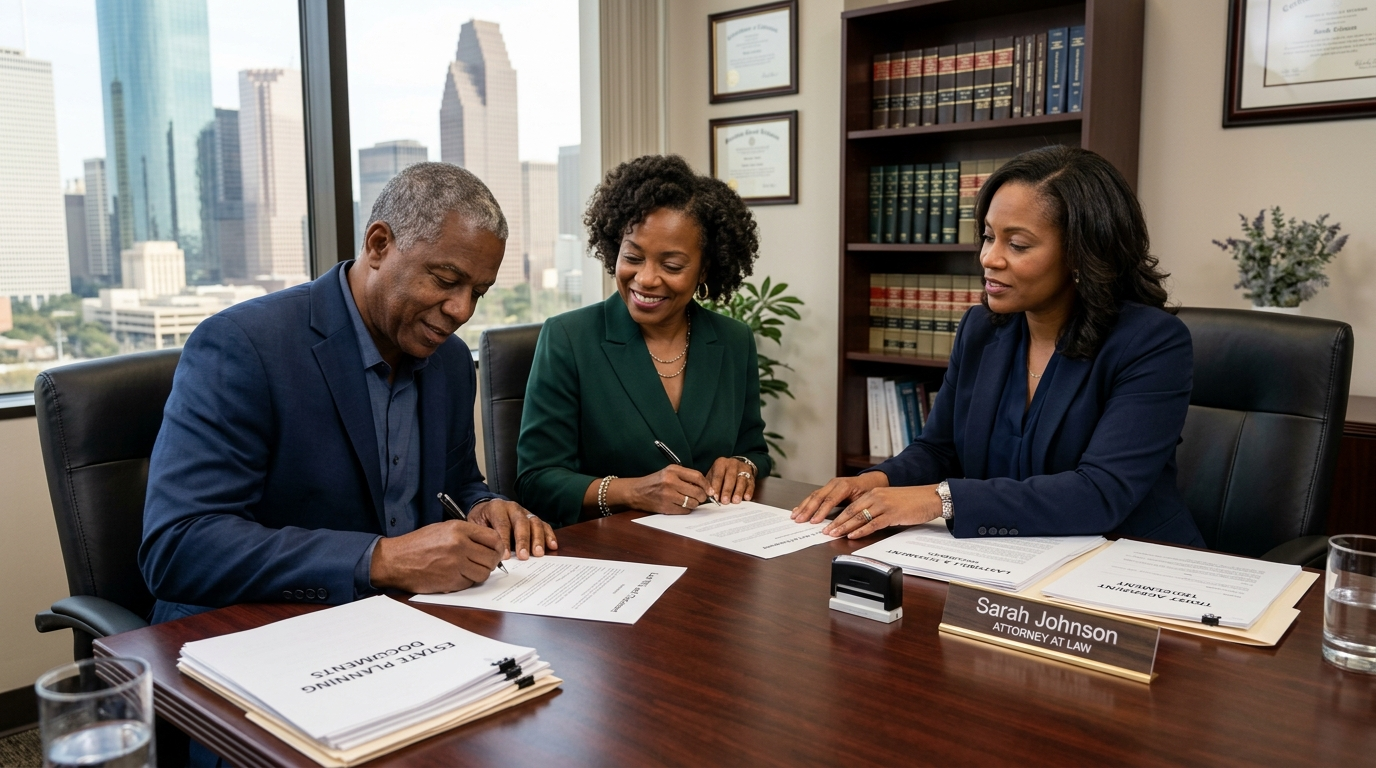
How to Sign and Witness a Will Correctly in Texas
Even a perfectly drafted Texas will can be invalidated by improper execution. Follow these steps exactly:
- Print the final will document
- Have 2 adult witnesses present at the same time — they must be credible, disinterested parties (someone who inherits under the will should not be a witness)
- Sign the will in front of both witnesses simultaneously
- Have both witnesses sign the will in your presence
- Recommended: have you, both witnesses, and a notary all sign a self-proving affidavit attached to the will — this eliminates the need for witnesses to appear in probate court after your death
Store the original will in a fireproof safe or safety deposit box. Give your executor a copy and let them know where the original is stored. Consider depositing the original with the county clerk’s office under Texas Estates Code § 252.001 for maximum security.
When to Update Your Texas Will
Your will should be reviewed and potentially updated after any major life change, including:
- Marriage or divorce — Texas divorce does not automatically remove a spouse from your will; an update is needed
- Birth or adoption of children — especially to add guardian designations
- Death of a named beneficiary or executor
- Significant change in assets — acquiring real estate, a business, or a large inheritance
- Moving to or from Texas — some other states have different formality requirements
A complete estate plan for most Texas families should include a will, durable power of attorney, medical power of attorney, and advance directive — a package most attorneys provide for $1,500–$3,000 flat fee.
Frequently Asked Questions
Under Texas Estates Code § 251.051, a valid typed will must be: (1) in writing, (2) signed by the testator or by someone at their direction, and (3) attested by two credible witnesses who are at least 14 years old and who sign the will in the testator’s presence. A holographic will — entirely handwritten and signed by the testator — is also valid under § 251.052 and requires no witnesses.
Texas law allows handwritten holographic wills without a lawyer or witnesses, as long as the entire document is in the testator’s handwriting and signed. However, even minor errors in a self-drafted will can cause it to be challenged or partially invalidated in probate. For most people, having an attorney draft or review a will costs $300–$800 and eliminates ambiguity that could cost heirs far more.
Dying without a will means your estate passes under Texas intestate succession laws (Texas Estates Code § 201.001). The split between your spouse and children depends on whether assets are community or separate property — and often does not match what you would have wanted. Unmarried partners receive nothing. The process also goes through probate court, adding time and cost.
You can revoke a Texas will by: (1) creating a new will that expressly revokes prior wills, (2) physically destroying the old will with intent to revoke, or (3) executing a signed written revocation meeting the same requirements as a will. Marriage, divorce, or having children does not automatically invalidate a Texas will — updates must be made intentionally.
Texas does not require filing a will with a court before death. However, under Texas Estates Code § 252.001, you can deposit a will with the county clerk for safekeeping. After death, the will must be filed for probate within 4 years. The standard practice is to keep the original in a fireproof safe and give a copy to your executor.
Sources & Further Reading

Your Houston Estate Planning Attorney
BJ Kemp
Texas State Bar #24116608 · Texas Legal Giants · Houston, TX
BJ Kemp helps Texas families create legally sound wills that protect what they’ve built and make their wishes crystal clear. He handles the entire drafting process — from reviewing your assets and family situation to making sure every signature and witness requirement is properly met.
(346) 971–7333 — Free Case Review