
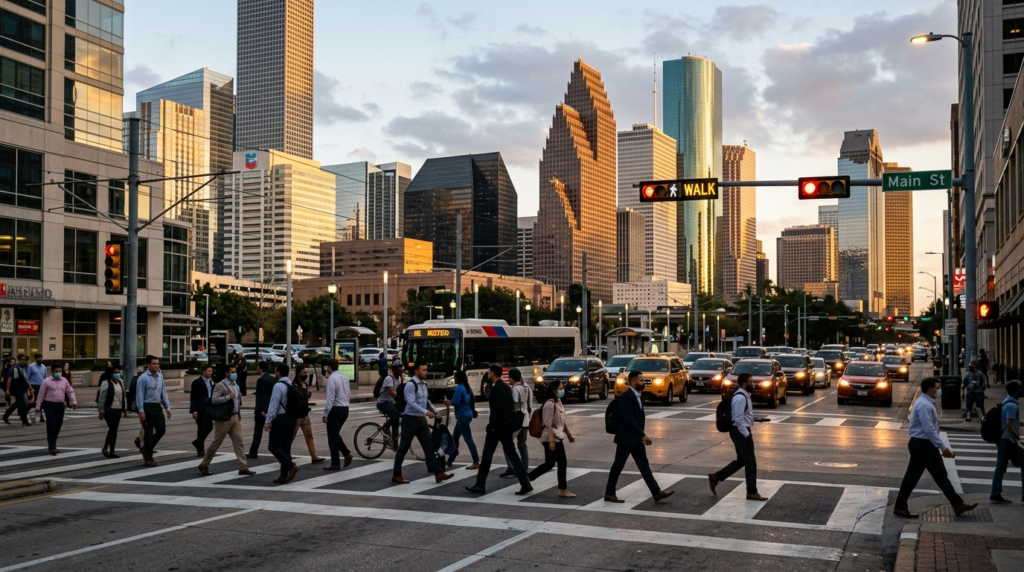
If you were hit by a car as a pedestrian in Texas, you have the right to recover compensation for your medical bills, lost wages, and pain and suffering — and you have 2 years to act. Pedestrian accidents cause some of the most severe injuries possible: spinal damage, traumatic brain injury, multiple fractures, and internal bleeding. With TxDOT reporting over 800 pedestrian fatalities in Texas in recent years, this is one of the state’s most serious traffic safety crises.
Understanding your rights — and the steps to protect your claim — is critical before you speak with any insurance company.
Texas Law on Pedestrian Rights: What Drivers Must Do
Under Texas Transportation Code Chapter 552, drivers have specific duties toward pedestrians:
- Yield at crosswalks: Drivers must yield the right of way to pedestrians lawfully within a marked crosswalk or at an unmarked crosswalk at an intersection
- No passing a stopped vehicle at a crosswalk: A driver may not pass a vehicle that has stopped to allow a pedestrian to cross
- Exercise due care: Drivers must exercise due care to avoid colliding with a pedestrian — this applies even outside of crosswalks
- Give audible warning when necessary: Drivers must sound their horn when necessary to warn a pedestrian of an approaching vehicle
Pedestrians also have duties — following traffic signals, using crosswalks when available, and not suddenly stepping into traffic. But violating a pedestrian rule does not eliminate your right to recover; Texas’s comparative fault system still allows recovery if the driver was primarily at fault.
Compensation Available After a Pedestrian Accident in Texas
Texas law allows pedestrian accident victims to recover all economic and non-economic damages caused by the collision:
- Medical expenses — emergency care, surgeries, hospitalization, physical therapy, and all future medical costs related to the accident
- Lost wages — income lost while recovering, plus reduced earning capacity if permanent disability affects your ability to work
- Pain and suffering — physical pain, emotional distress, and loss of enjoyment of life
- Permanent impairment — loss of limb function, scarring, paralysis
- Wrongful death damages — if the pedestrian died, surviving family members can recover funeral costs, loss of financial support, and loss of companionship
Texas pedestrian accident settlements average $150,000–$600,000 for serious injuries, with cases involving paralysis or wrongful death often exceeding $1 million. Because pedestrians have no vehicle to absorb the impact, injuries are typically far worse than those in car-on-car accidents.
Texas Comparative Fault: How Shared Blame Affects Your Recovery
Texas follows a modified comparative fault system under Texas Civil Practice & Remedies Code Chapter 33. If you are found partially at fault for the accident, your compensation is reduced by your percentage of fault. You can still recover as long as your share of fault is less than 51%.
For example: if a driver was speeding and ran a crosswalk signal, but you were also crossing against a “Don’t Walk” signal, a jury might assign 80% fault to the driver and 20% to you. If your total damages are $500,000, you would recover $400,000 (80% of $500,000).
Insurance companies routinely try to inflate the pedestrian’s percentage of fault to reduce what they must pay. An experienced personal injury attorney can gather traffic camera footage, witness statements, and accident reconstruction evidence to establish the driver’s primary negligence.
Hit by a Car as a Pedestrian in Texas?
Pedestrian injuries are life-altering. BJ Kemp fights for Texas victims to recover the full compensation they deserve — no fees unless you win.
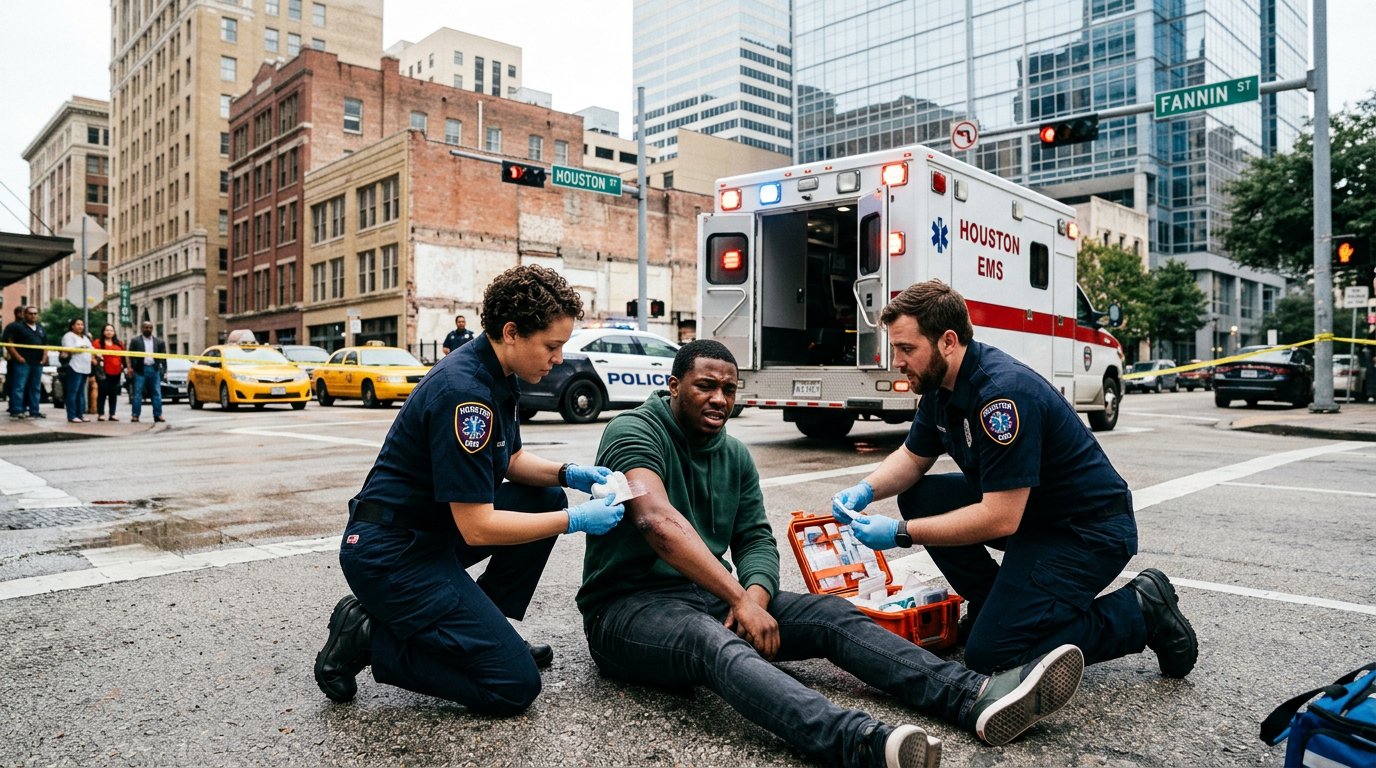
Steps to Take Immediately After a Texas Pedestrian Accident
The decisions you make in the hours after a pedestrian accident directly affect both your recovery and your legal claim:
- Call 911 — a police report documents the accident officially and preserves key details
- Seek emergency medical care — adrenaline masks pain; spinal injuries, internal bleeding, and TBI require immediate evaluation even if you feel okay
- Document everything — photograph the scene, your injuries, the vehicle’s position, skid marks, and any traffic signals or signs before they are disturbed
- Get witness information — names and phone numbers of anyone who saw the accident
- Do not speak with the driver’s insurance adjuster — adjusters are trained to minimize claims; any recorded statement can be used against you
- Keep all medical records and bills — documentation is the backbone of your compensation claim
The 2-Year Deadline for Texas Pedestrian Accident Claims
Under Texas Civil Practice & Remedies Code § 16.003, you have 2 years from the date of the accident to file a personal injury lawsuit. If you were struck by a government vehicle — a city bus, police car, or county vehicle — Texas Tort Claims Act requirements impose an even shorter notice deadline, typically 6 months.
Many pedestrian accident victims wait too long to consult an attorney, losing access to critical evidence: surveillance footage is deleted within 30–90 days, witnesses forget details, and skid marks fade. Consulting an attorney within weeks — not months — of the accident preserves your options and your evidence.
Frequently Asked Questions
Fault depends on the circumstances. Texas follows a modified comparative fault rule — each party’s percentage of fault is calculated separately. If a driver ran a red light and struck a pedestrian in a crosswalk, the driver likely bears most or all of the fault. If the pedestrian crossed outside a crosswalk, they may share some responsibility. Under Texas Civil Practice & Remedies Code § 33.001, you can still recover as long as your share of fault is less than 51%.
Texas pedestrian accident settlements range from $75,000 for moderate injuries to over $2 million for cases involving permanent disability or wrongful death. Pedestrians sustain some of the most severe injuries possible — spinal damage, TBI, multiple fractures — which drives settlement values significantly higher than typical car-on-car accidents.
Call 911 immediately and get emergency medical attention even if you feel okay. Get the driver’s name, plate number, and insurance information. Photograph the scene, your injuries, and the vehicle. Collect witness contact information. Do not give a recorded statement to the driver’s insurer before consulting an attorney. Seek formal medical evaluation within 24–48 hours.
Yes — Texas comparative fault law means you can still recover even if you were jaywalking, as long as you are found less than 51% at fault. If a driver was speeding, distracted, or impaired and hit you while you were jaywalking, the driver may still bear the majority of fault. Your compensation is reduced proportionally by your percentage of fault.
Texas law gives pedestrian accident victims 2 years from the accident date to file a personal injury lawsuit under Texas Civil Practice & Remedies Code § 16.003. If the driver operated a government vehicle, a notice of claim must typically be filed within 6 months. Missing these deadlines ends your right to recover, even if your case is strong.
Sources & Further Reading

Your Houston Pedestrian Accident Attorney
BJ Kemp
Texas State Bar #24116608 · Texas Legal Giants · Houston, TX
BJ Kemp has fought for pedestrians seriously injured by reckless and distracted drivers across Houston. He understands that pedestrian victims face the most catastrophic injuries and the most aggressive insurance defense tactics — and he builds cases that document the full, long-term impact of those injuries.