
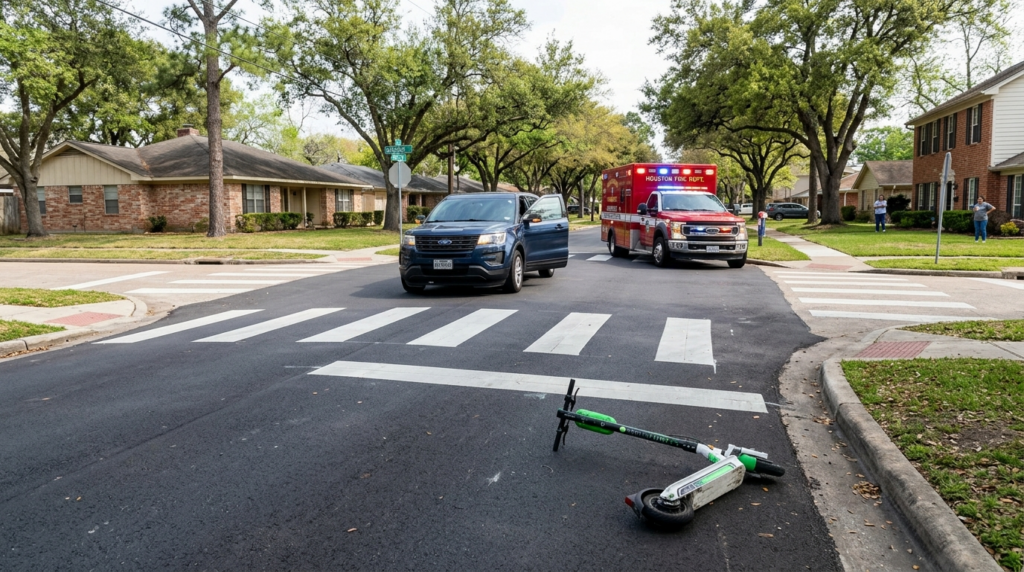
If you were hit by an e-scooter or e-bike rider, or you or your child were injured while riding one, liability in Texas can fall on more than one party — the rider or driver involved, the scooter’s manufacturer, or even a parent whose child caused the crash. Which one depends on what actually went wrong.
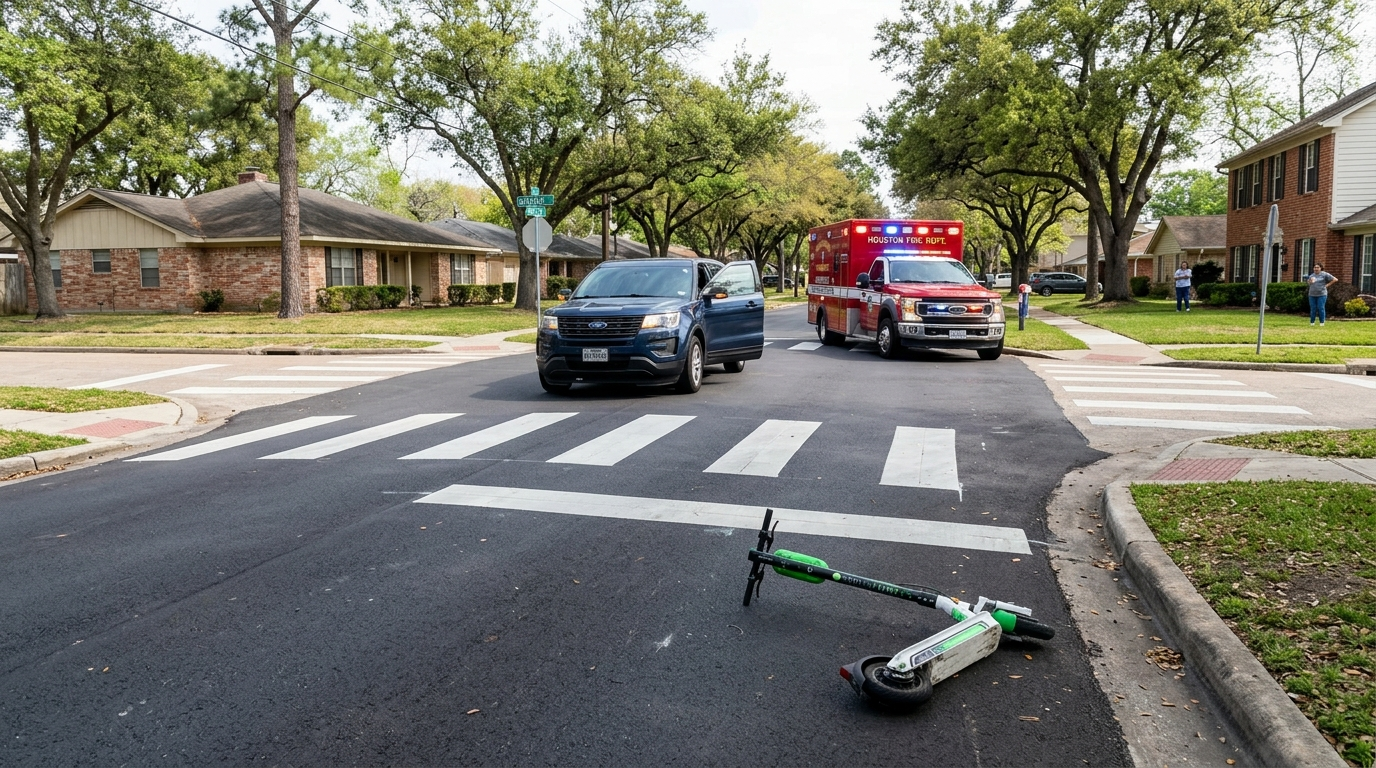
E-Scooter and E-Bike Crashes Are Surging in Texas
E-scooter injuries jumped roughly 80% nationwide between 2023 and 2024, and Houston-area police departments report responding to teen scooter and e-bike crashes more than once a week in some suburbs alone. As more riders take to residential streets, sidewalks, and intersections, the legal questions after a crash have gotten more complicated — because Texas law treats these vehicles differently depending on how the accident happened.
Who Can Be Held Liable in a Texas E-Scooter Accident
The Driver Who Struck the Rider
If a driver hits an e-scooter or e-bike rider, ordinary negligence rules apply. Texas recognizes the sudden emergency doctrine, meaning a driver who reacts reasonably to a hazard that appears without warning isn’t automatically liable. But that defense only holds up if the driver was already driving carefully beforehand — obeying the speed limit, keeping a safe following distance, and not distracted by a phone. Near schools and residential neighborhoods, juries hold drivers to an even higher standard of care.
The Scooter or E-Bike Manufacturer
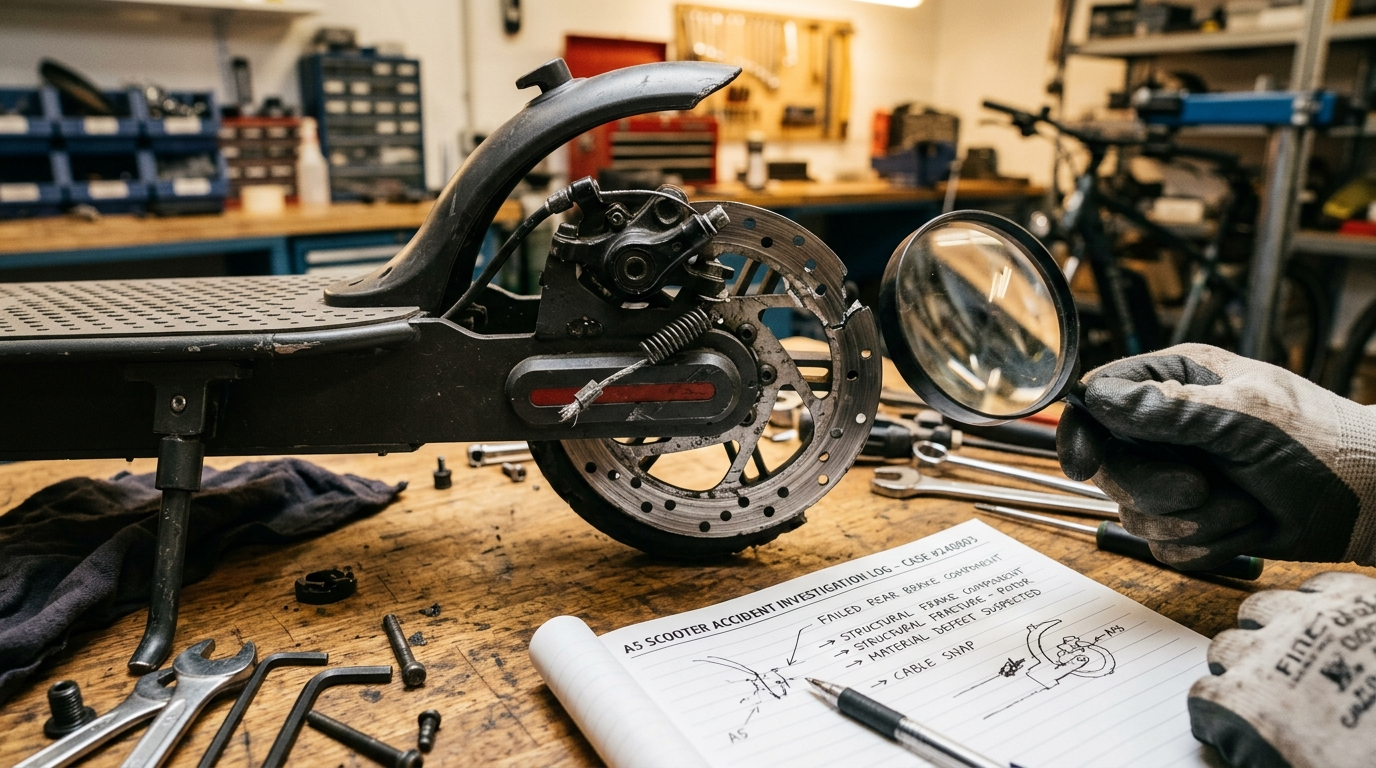
When a crash happens because a scooter’s brakes failed, a wheel locked up, or the frame snapped, the case may shift from a driver-negligence claim to a product liability claim. Under Texas Civil Practice and Remedies Code Chapter 82, a manufacturer, distributor, or retailer can be held liable for a manufacturing defect, a design defect, or a failure to warn of a known danger. If a bike shop tells you a scooter came in with no working brakes and loose bolts, that’s the kind of detail that can support all three theories at once.
The Parent of a Minor Rider
Texas law allows a parent to be held civilly liable for damages a minor child causes while negligently operating a vehicle — including an e-scooter or e-bike. If a teenager riding recklessly at high speed causes a serious injury, the injured party’s attorney can pursue the family directly, not just the teenager. Many parents don’t realize this exposure exists until they’re already facing a claim.
Hurt in an E-Scooter or E-Bike Accident?
Find out who’s actually liable before you talk to an insurance adjuster. Your first call is free.
(346) 971-7333 — Free Case Review
How Comparative Fault and Rental Waivers Affect Your Claim
Texas’s Modified Comparative Fault Rule
Texas follows a modified comparative fault system under Civil Practice and Remedies Code Section 33.001. If you’re found 50% or less at fault for the accident, you can still recover damages, reduced by your percentage of fault. If you’re found 51% or more at fault, you recover nothing. That means even a driver who was only 10% responsible — say, slightly over the speed limit or slow to react — can still owe a share of the damages if that 10% contributed to a serious injury.
Do Lime and Bird Rental Waivers Actually Protect the Company?
Riders of rental e-scooters typically click through a liability waiver in the app before riding. These waivers are not absolute shields. Texas courts generally won’t enforce a waiver that attempts to excuse a company from liability for gross negligence or a known, unaddressed safety defect in its fleet. If the rental company kept deploying scooters it knew had faulty brakes, a waiver signed before the ride is unlikely to fully protect it.
What Compensation You Can Recover
A successful e-scooter or e-bike injury claim in Texas can include medical expenses (both past and future), lost income if the injury kept you from working, pain and suffering, and permanent impairment damages for injuries like fractures, head trauma, or road rash requiring skin grafts. In cases involving a defective product a manufacturer knowingly sold anyway, Texas law also allows for exemplary (punitive) damages meant to punish especially reckless conduct.
What to Do After an E-Scooter or E-Bike Accident
Preserve the Scooter or Bike as Evidence
If a mechanical failure played any role in the crash, do not let the scooter get repaired, discarded, or returned to a rental company before it’s inspected. The physical evidence of a brake or frame failure can be the single most important piece of proof in a product liability claim.
Get a Police Report and Document the Scene
Photograph the scooter, the road conditions, and any visible injuries. A police report creates an official record of the crash that insurance companies and courts will rely on.
Don’t Give a Recorded Statement Before Talking to a Lawyer
Insurance adjusters — whether representing a driver, a rental company, or a manufacturer — may ask for a recorded statement early, before you know the full extent of your injuries. Anything you say can be used to minimize your claim later.
Act Within the Statute of Limitations
Texas gives injury victims two years from the date of the accident to file a personal injury lawsuit. For claims involving a minor, that window can extend, but waiting still costs you evidence, witness memory, and negotiating leverage.
Frequently Asked Questions
Can I sue if my child was hurt riding an e-scooter, even if they were partly at fault?
Yes. Texas’s modified comparative fault rule allows recovery as long as your child is found 50% or less at fault, with the award reduced by their percentage of responsibility. A driver’s negligence or a scooter’s mechanical defect doesn’t disappear just because your child made a mistake too.
Can I be sued if my teenager caused an e-scooter accident?
Possibly. Texas law allows a parent to be held civilly liable for damages caused by a minor child’s negligent operation of a vehicle, including an e-scooter or e-bike, in addition to any claim against the teenager directly.
Does a Lime or Bird waiver stop me from suing after a crash?
Not entirely. Texas courts generally won’t enforce a rider waiver that attempts to excuse a rental company from liability for gross negligence or a known safety defect the company failed to fix before deploying its scooters.
What damages can I recover in a Texas e-scooter injury claim?
You can pursue past and future medical expenses, lost wages, pain and suffering, and permanent impairment damages. If a manufacturer knowingly sold a defective scooter, Texas also allows exemplary damages under Civil Practice and Remedies Code Chapter 82.
How long do I have to file an e-scooter accident lawsuit in Texas?
Texas Civil Practice and Remedies Code Section 16.003 gives injury victims two years from the date of the accident to file a personal injury lawsuit. Claims involving a minor can have an extended window, but evidence and witness memory fade the longer you wait.
Sources & Further Reading

Your Houston E-Scooter & E-Bike Accident Attorney
BJ Kemp
Texas State Bar #24116608 · Texas Legal Giants · Houston, TX
E-scooter and e-bike crashes move fast, and so does the fight over who’s responsible for them. I help Houston families sort out whether a driver, a manufacturer, or another party is on the hook — and make sure evidence like a failed brake doesn’t disappear before it can be examined.
(346) 971–7333 — Free Case ReviewIf you or your child were hurt in an e-scooter or e-bike accident, don’t accept a settlement or sign anything before speaking with a Houston personal injury attorney. Learn more about how Texas Legal Giants handles product liability and comparative fault claims across Texas.