
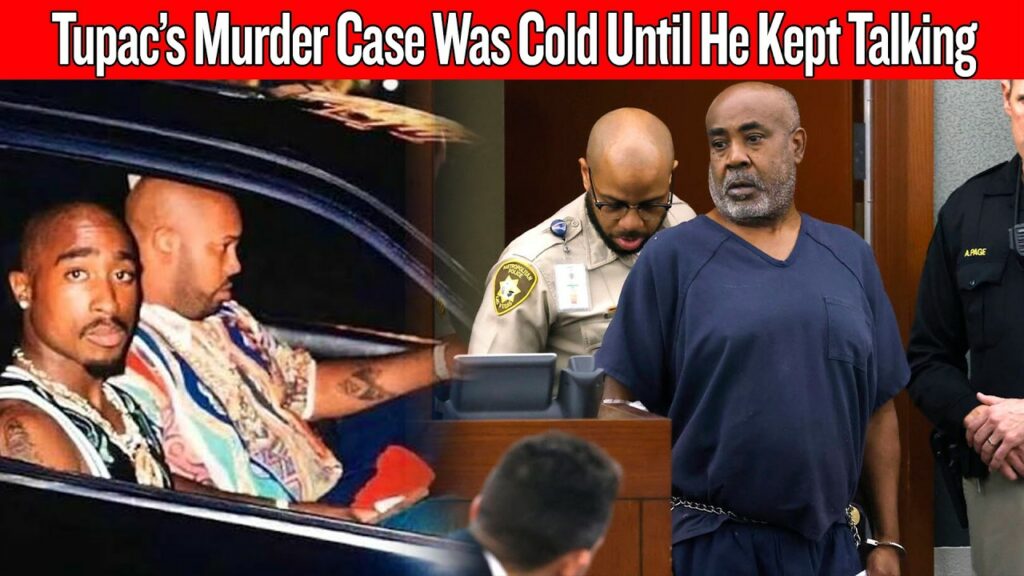
A Las Vegas jury took roughly three hours to convict Duane “Keefe D” Davis of first-degree murder in the 1996 killing of Tupac Shakur — a case that sat cold for nearly 30 years with no murder weapon, no cooperating eyewitness, and four separate agencies that gave up on it. The thing that finally closed it was not DNA and not ballistics. It was the defendant’s own mouth, recorded across 18 years.
Davis was never accused of pulling the trigger. Prosecutors said he supplied the gun and organized the shooting, and that the shots came from the back seat of his car, fired by someone else’s hands. He was convicted of first-degree murder anyway. Texas has a statute that does the exact same thing, and a rule of evidence that lets your words walk into a courtroom when nobody else’s can.
What the Jury Actually Heard — 18 Years of Tape
The chief deputy district attorney told the jury plainly that the case was built out of the defendant’s own statements. The record the prosecution assembled reads like a timeline of self-incrimination:
- 2008 — a confidential interview with law enforcement.
- 2009 — another session with investigators.
- 2017 — two more interviews.
- 2018 — a BET docuseries where he sat on camera and walked through the entire night.
- 2019 — a memoir, with his own name on the cover, sold for money.
The proffer agreement that was never immunity
The 2008 interview was not idle bragging to a stranger. It happened under a proffer agreement — the arrangement people call “queen for a day.” An LAPD detective told him in substance that nothing he said could be used against him. That sounds like a shield. It is not immunity. A proffer is a narrow contract with the government: it typically says the prosecution will not use the words spoken in that room directly against you. It does not stop the investigation. It does not stop the state from building the same case out of other evidence. And it has conditions.
How he lost the protection
Prosecutors argued he broke those conditions by taking the same story public — on BET, and then in a book he sold. The state’s position was that once he did, the shield was gone and the 2008 tape came in. The jury heard every word of it. His own lawyer’s closing argument amounted to my client is a liar who made it up for money and attention. That is what half-cooperation buys: a defense where your own attorney has to attack your credibility in front of 12 people, because it is the only card left.
Texas Rule of Evidence 801(e)(2): Your Words Are Not Hearsay
People kept asking why the defense did not simply stand up and shout “objection, hearsay — that’s someone repeating my client’s words outside this courtroom.” The answer is a rule that works the same way in Texas as in Nevada. Under Texas Rule of Evidence 801(e)(2), a statement “offered against an opposing party” that “was made by the party in an individual or representative capacity” is not hearsay at all.
A door that opens one direction
It needs no exception, no Miranda warning, and no lawyer in the room. Everyone else’s out-of-court words get filtered, challenged, or kept out. Yours walk straight in. Rule 801(e)(2) also reaches statements you adopted, statements by someone you authorized to speak for you, and — subsection (E) — statements by a coconspirator made during and in furtherance of the conspiracy. That last one means a friend’s recorded phone call can become evidence against you.
Where “off the record” actually lives
There is no such thing. Not with an officer on a sidewalk, not on a recorded jail call, not with a cellmate, not in a text, not on social media, and certainly not in a book. Police are legally permitted to lie to you during an interview. “You’re not under arrest,” “this is off the record,” and “help me help you” are interview techniques, not legal protections, and none of them bind a prosecutor who is not standing in the room.
Has an officer asked you to “come clear something up”?
Call before you talk, not after. The first call is free, and it is the cheapest hour of the entire case.
(346) 971-7333 — Free Case ReviewSalinas v. Texas: Silence Only Protects You If You Say It Out Loud
The most important case on this came out of Houston. In Salinas v. Texas, 570 U.S. 178 (2013), Genovevo Salinas was questioned by Houston police about a double murder. He was not under arrest, not handcuffed, and not read Miranda warnings. He answered questions voluntarily and believed he was being helpful. Then officers asked whether the shell casings from the scene would match the shotgun found at his house — and he simply went quiet.
The prosecutor used the silence as evidence
At trial the State told the jury about that pause and argued it showed guilt. The Supreme Court allowed it, because Salinas never expressly invoked his Fifth Amendment privilege — he just stopped talking. In a voluntary, non-custodial conversation, the right switches on only when you invoke it out loud. The Fifth Amendment is not a force field. It is a fire alarm, and it only works once you pull it.
“Maybe I should talk to a lawyer” does not count
In Davis v. United States, 512 U.S. 452 (1994), the Supreme Court held that an ambiguous reference to counsel does not require officers to stop questioning. Hedging — I think I might want a lawyer — buys you nothing. The invocation must be clear and unambiguous, and then you have to actually stop. Invoking the right and chatting for another 40 minutes effectively undoes it.
Penal Code § 7.02: You Do Not Have to Fire a Shot in Texas Either
Davis was convicted of first-degree murder over a shot fired from his back seat by another person. Texas Penal Code § 7.02(a)(2) reaches the same conduct: a person is criminally responsible for another’s offense if, “acting with intent to promote or assist the commission of the offense, he solicits, encourages, directs, aids, or attempts to aid the other person to commit the offense.” If they pull the trigger, it becomes your conviction — and capital murder in Texas carries life without parole or death.
Subsection (b) goes further than most people realize
Section 7.02(b) says that if, in attempting to carry out a conspiracy to commit one felony, a conspirator commits another felony, all conspirators are guilty of the felony actually committed — though having no intent to commit it — so long as it was in furtherance of the unlawful purpose and “should have been anticipated.” Agree to a robbery, and if someone in the group kills, that homicide can land on everyone.
“I was just there. I was just driving.”
That sentence is the one heard most often in a Houston defense office, and it is not a defense. It is a description of a party. Every time someone says it on the record believing it clears their name, they are placing themselves at the scene, in the group, and with knowledge — three of the elements the State has to prove anyway. If you are facing a charge like this, see how how BJ Kemp defends these cases and call before the next interview.
There is no clock on murder in Texas
Code of Criminal Procedure art. 12.01(1)(A) lists murder and manslaughter under “no limitation.” Most other felonies carry a three-year limitations period under art. 12.01(11), and Class A and B misdemeanors get two years under art. 12.02(a). Murder gets nothing. Thirty years of silence from investigators is not escape — it is a delay.
Five Things to Do Before You Say Another Word
- Memorize all three sentences. “I am invoking my Fifth Amendment right to remain silent. I want a lawyer now. I am not answering any more questions.” Say all three, then stop talking.
- Ask: “Am I free to leave?” It is the only question worth asking. If yes, leave. If no, you are detained — go straight to the three sentences. Do not try to measure how much trouble you are in by asking questions; that conversation is evidence.
- Treat every channel as recorded. Jail phones, texts, social media posts, and interviews all get played back to a jury.
- Cooperate only in writing, through counsel. Cooperation can absolutely be the right move — but with terms, at the right stage, and negotiated by a lawyer. Never improvised alone because the room feels friendly.
- Invoking is not an admission. A jury can never be told that you declined to answer questions after properly invoking. What they hear is what you said. Every time.
Frequently Asked Questions
Do I have to say I am invoking my right to remain silent in Texas?
Yes, if the conversation is voluntary and you are not in custody. In Salinas v. Texas, 570 U.S. 178 (2013) — a Houston case — the Supreme Court allowed prosecutors to use a suspect’s silence as evidence of guilt because he simply stopped answering instead of expressly invoking the Fifth Amendment. Say it out loud, then stop talking.
Can I be charged with murder in Texas if I did not pull the trigger?
Yes. Texas Penal Code § 7.02(a)(2) makes you criminally responsible for another person’s offense if you solicit, encourage, direct, aid, or attempt to aid its commission with intent to promote or assist it. Section 7.02(b) goes further: conspirators are guilty of a different felony committed in furtherance of the conspiracy even without intent, if it should have been anticipated.
Is there a statute of limitations for murder in Texas?
No. Code of Criminal Procedure art. 12.01(1)(A) places murder and manslaughter under the “no limitation” category. By comparison, most other felonies carry three years under art. 12.01(11), and Class A and Class B misdemeanors carry two years under art. 12.02(a).
Why can police use my own words against me but not someone else’s?
Texas Rule of Evidence 801(e)(2) states that a statement offered against an opposing party that was made by that party is not hearsay at all. It requires no exception, no Miranda warning, and no attorney present. The same rule also admits statements by a coconspirator made during and in furtherance of a conspiracy.
Does a proffer agreement protect me from prosecution?
No — a proffer is not immunity. It is a conditional contract that usually prevents direct use of what you say in that session, while leaving the government free to keep investigating and build the same case from other evidence. Break the conditions, as prosecutors argued happened when the Tupac defendant retold the story on television and in a book he sold, and the protection can disappear.
Sources & Further Reading
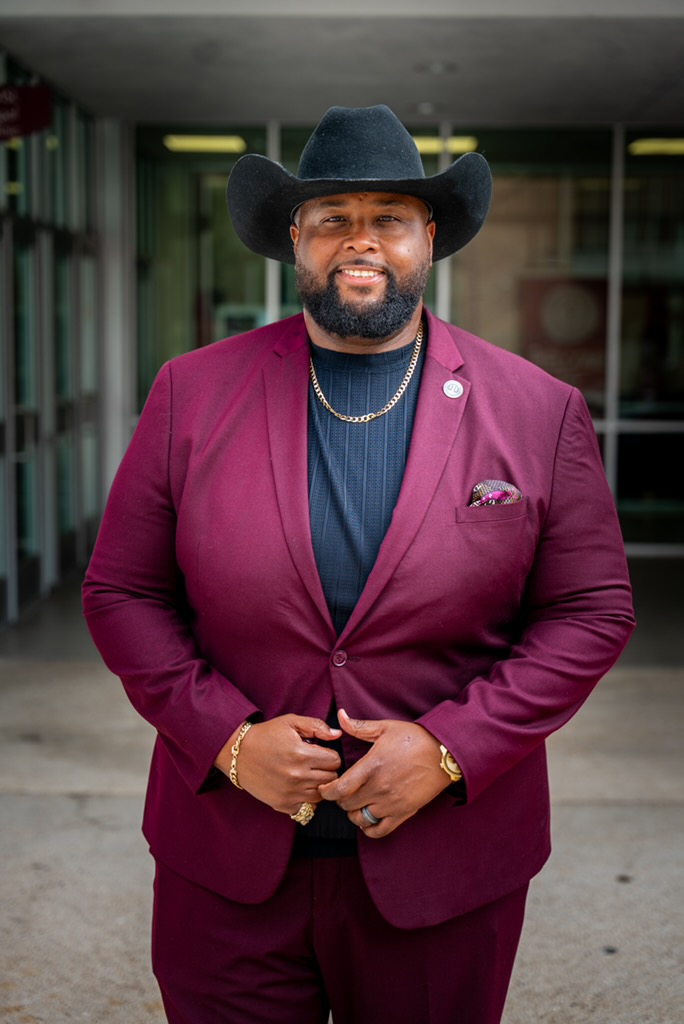
Your Houston Criminal Defense Attorney
BJ Kemp
Texas State Bar #24116608 · Texas Legal Giants · Houston, TX
Nobody has ever talked their way out of a murder charge at a kitchen table, but people talk their way into charges every week. BJ Kemp steps in before the interview, handles any cooperation in writing and on terms, and fights law-of-parties cases where the client never touched a weapon. Licensed in Texas and Michigan.
(346) 971–7333 — Free Case Review