

A romance scam becomes a federal crime the moment a single text message, Zelle transfer, or screenshot of a fake balance crosses a state line — and under 18 U.S.C. § 1343 each one of those messages is its own count carrying up to 20 years. In Texas it is also a felony under Penal Code § 31.03, and when a scammer’s take across every victim adds up to $300,000 or more, it lands in the same punishment range as aggravated robbery.
In August 2026, federal prosecutors in Oregon charged a man who allegedly spent four years pretending to be a San Francisco 49ers player. What makes the case worth your time is not the fake jewelry or the beach workout videos. It is the one detail attorney BJ Kemp says he had never seen in a fraud case before — the women did check his story, and the search results confirmed the lie.

What Actually Happened: Four Years, 26 Women, and $1.3 Million
On August 24, 2026, the FBI arrested Daejon Love, 35, and Taylor Jamie Chan, 18, at the airport in Boise, Idaho. Both were charged with wire fraud and conspiracy to commit wire fraud by the U.S. Attorney’s Office for the District of Oregon, on complaints issued a week earlier. Prosecutors say the scheme started in February 2022 and ran for more than four years before it ended on that jet bridge.
The Personas, the Props, and the 18-Year-Old “Financial Adviser”
Love allegedly built a rotating set of fictitious identities across dating apps and social media — court filings list names including Jon Love, Avril Lyto Love, and Jordan Love — presenting himself as either a 49ers player or a wealthy real estate investor. The props matched the story: team gear, jewelry, helmets, training footage shot on a beach. On camera he claimed a $15 million house in Malibu, a $20 million house in Beverly Hills, a Miami beach house, and a Manhattan penthouse.
The second defendant is the part most people miss. Chan, 18 years old, allegedly never claimed to be an NFL player at all. His role was to get on the phone as Love’s investment adviser and confirm the returns using fabricated account statements. At least 26 women across California, Idaho, Oregon, and Washington lost roughly $1.3 million. The FBI has said publicly it believes there are more victims who have not come forward.
The Payment-to-Get-Paid Loop That Kept It Running
The mechanism was a classic advance-fee structure: send $30,000, get $60,000 back in two weeks. When the payout did not arrive, the ask was another transfer — framed as a fee or a release cost, with a personal guarantee attached. If you recognize the phrase “just send it one more time and I’ll cover it myself,” that is not a negotiation. It is the same scheme in different words, and it is the clearest signal that the money already sent is gone.
How Four Years of Fake Posts Taught a Search Engine to Vouch for Him
The Detail BJ Kemp Says He Had Never Seen in a Fraud Case
Walking through the criminal complaint in the video above, BJ highlights a screenshot that changes the character of the whole case. Because Love had posted 49ers content continuously since 2022, an AI-generated search summary appeared to place him on the San Francisco roster — and the complaint includes an image of his professional profile, where he listed himself as a 49ers fan, displayed directly above a roster reference.
Think about what that means for the women involved. They did the exact thing every consumer-protection guide tells you to do: they checked his name before sending money, and the verification step returned a confirmation. As BJ puts it in the video, Love did not forge a diploma — he spent four years poisoning the result, then pointed at it and said don’t believe me, believe the search.
Legally, that cuts against him rather than for him: a person who manufactures his own corroboration knows precisely which lie needs propping up. And it is not an isolated quirk. The FBI’s 2025 Internet Crime Report logged more than $19 million lost that year to confidence and romance scams with an identifiable AI component.

What the FBI Did Instead — One Phone Call
Investigators did not run a search. They called the 49ers and asked whether Daejon Love had ever been associated with the organization. The answer was no. That single call is the difference between verification and a summary — because a search engine tells you what the internet says about a person, and the internet is a thing that person can spend four years shaping. The team, the licensing board, or the employer tells you what is true.
Why This Is Charged as Wire Fraud, Not Theft — 20 Years Per Count
“Wire” Means Your Text Messages, Not Special Equipment
Wire fraud under 18 U.S.C. § 1343 has three elements: a scheme to defraud, a material misrepresentation, and the use of interstate wires to carry it out. People get stuck on the third because “wire” sounds technical. It is not. A text message is a wire. A Zelle or CashApp transfer is a wire. A screenshot of a fabricated account balance sent across a state line is a wire.
That is why a man in one state messaging a woman in another about $30,000 is not a local theft report. It is a federal offense the moment the message sends, with a statutory maximum of 20 years per count — 30 years if a financial institution is affected. With 26 identified victims and four years of messages, that count exposure is not theoretical.
Chan Never Claimed to Be an NFL Player. Conspiracy Law Still Reaches Him.
Under 18 U.S.C. § 1349, conspiracy to commit wire fraud carries the same penalty as the completed offense. You do not have to tell the central lie. You do not have to be the person collecting the money. Agreeing to the scheme and taking one act to advance it is enough — and taking a phone call to vouch for fake investment returns is that act. An 18-year-old who “just handled the phone calls” is facing the same exposure as the man in the jersey.
Sent Money to Someone Who Wasn’t Who They Said They Were?
The first call is free and confidential. No judgment — just a clear read on what can still be recovered.
(346) 971-7333 — Free Case ReviewThe Line Between a Bad Date and a Federal Crime Is One Word the Supreme Court Defined in 1999
Neder v. United States and the “Reasonable Person” Standard
People exaggerate on dating apps constantly and the FBI is not waiting at the airport for them. The word doing the work is material. In Neder v. United States, 527 U.S. 1 (1999), the Supreme Court held that a misrepresentation is material if a reasonable person would attach importance to it in deciding what to do.
A lie about height is not material. A lie about age is not material. “I play for the 49ers, send me $30,000 and you’ll have $60,000 in two weeks” is the reason the money moved, which makes it material by definition. And the standard is a reasonable person — not an NFL scout, not a lifelong football fan. The law has never asked whether the smartest possible person would have caught it.
Kousisis (2025): Federal Fraud Even Without Economic Loss
In Kousisis v. United States, decided May 22, 2025, the Court held that inducing someone into a transaction through a materially false statement is federal fraud even if the defendant never intended to cause economic loss. The injury the law recognizes is that you parted with your money in reliance on a lie — which forecloses the defense that “she got what she paid for” or “I always meant to pay it back.”

If This Happens to You in Texas: § 31.01, § 31.09, and the $300,000 Line
Consent Obtained by Deception Is Not Consent
The most common thing a scammer’s defense will say is: she handed me the money herself. Texas law answers that directly. Penal Code § 31.03(a) defines theft as unlawfully appropriating property with intent to deprive the owner, and § 31.03(b)(1) makes appropriation unlawful when it is without the owner’s effective consent. Section 31.01(3) then says consent is not effective if it is induced by deception — and § 31.01(1) defines deception to include promising performance you do not intend to perform. “Send me $30,000 and I’ll double it” is not a bad investment. In Texas it is the statutory definition of theft by deception.
§ 31.09 Adds Every Victim Together
Victims routinely decide their loss is too small to bother anyone with. Section 31.09 is why that instinct is wrong. When amounts are obtained under one continuing course of conduct, prosecutors may aggregate them and charge a single offense at the combined value. The Texas grading ladder under § 31.03(e):
- $2,500 – $29,999: state jail felony — 180 days to 2 years
- $30,000 – $149,999: third degree felony — 2 to 10 years
- $150,000 – $299,999: second degree felony — 2 to 20 years
- $300,000 or more: first degree felony — 5 to 99 years or life, the same range as aggravated robbery
Twenty-six people each convinced their $50,000 is not worth reporting are, collectively, a first-degree felony nobody ever charged. Your report is what turns someone else’s isolated complaint into a pattern.
Five Moves in the First 48 Hours — and Four Years to Sue
Stop Paying, Don’t Confront, Document Everything
- Stop sending money immediately. Every advance-fee scheme ends with a request to pay in order to get paid. There is no fee that releases funds that do not exist.
- Do not confront them first. The hour you accuse someone, profiles get deleted and numbers go dead. Capture first, confront later — or never.
- Screenshot the profile, the account names, every message thread, and every payment, and store it somewhere that is not only your phone. Email it to yourself; export the bank and payment-app records as PDFs.
- Verify at the source. Call the team, the firm, or the licensing board directly. An AI summary is not verification, as this case proves.
- Report federally at ic3.gov — these transfers cross state lines — and to the Texas Attorney General’s consumer protection division. Do this even if you think you are the only one. You are almost never the only one.
What You Can Actually Recover in a Texas Civil Suit
The criminal case belongs to the government; your civil case belongs to you, and it is separate. Under the Texas Theft Liability Act, § 134.005(a)(1) lets a theft victim recover actual damages plus up to $1,000 in additional damages, and § 134.005(b) says the prevailing party shall be awarded court costs and reasonable attorney’s fees. That fee-shifting provision is what makes these cases viable to bring at all. Civil Practice & Remedies Code § 16.004(a)(4) gives you four years from accrual to file. And do not sign anything they send you — settlement, release, repayment agreement. Someone who deceived you once will do it again on paper.
One last thing, because it is the reason these schemes survive: shame is the best security system a scammer has. This one ran four years not because the defendants were sophisticated, but because admitting you believed a fake football player felt worse than losing the money. No provision of Texas or federal law reduces a fraud charge because the victim was embarrassed. Our Houston civil litigation team takes these calls constantly, and you can reach the Southwest Freeway office directly.
Frequently Asked Questions
Can you sue a romance scammer in Texas to get your money back?
Yes. The Texas Theft Liability Act, Civ. Prac. & Rem. Code § 134.005(a)(1), lets you recover your actual losses plus up to $1,000 in additional damages, and § 134.005(b) requires the court to award the prevailing party reasonable attorney’s fees and costs. You have four years from accrual to file under § 16.004(a)(4). Collection is the hard part — which is why freezing and tracing assets early matters more than the size of the verdict.
Is a romance scam a federal crime or just a state one?
It is usually both. If any text, transfer, or screenshot crossed a state line, it is wire fraud under 18 U.S.C. § 1343, carrying up to 20 years per count — 30 years if a financial institution was affected. The same conduct is also felony theft in Texas under Penal Code § 31.03, graded by dollar amount from a state jail felony at $2,500 up to a first degree felony at $300,000.
How much do romance scams actually cost victims each year?
The FBI’s 2025 Internet Crime Report recorded 23,159 confidence and romance fraud complaints totaling $929,287,469 — up from $672,009,052 the year before. Texas ranked second nationally across all internet crime with 97,912 complaints and $1.83 billion in reported losses. Victims 60 and older accounted for $584 million of the romance-scam total.
What if the scammer only took a few thousand dollars from me?
Report it anyway. Texas Penal Code § 31.09 allows prosecutors to aggregate amounts obtained in one continuing course of conduct and charge them as a single offense at the combined value. Your $5,000 added to twenty-five other victims’ losses is what produces a first degree felony at the $300,000 threshold. Individually filed complaints are what let investigators see the pattern at all.
Will I have to explain the romantic relationship to police or a jury?
You will have to describe what you were told and why you sent money, because that is the materiality element from Neder v. United States (1999). But nothing in Texas or federal law reduces a fraud charge because a victim feels embarrassed, and the legal standard is what a reasonable person would rely on — not what the most skeptical person alive would have caught.
Sources & Further Reading
- Texas Penal Code ch. 31 — Theft (§§ 31.01, 31.03, 31.09)
- Texas Civ. Prac. & Rem. Code ch. 134 — Texas Theft Liability Act
- Texas Civ. Prac. & Rem. Code § 16.004 — Four-Year Limitations Period
- Texas Attorney General — Watch Out for Romance Scams
- FBI IC3 — 2025 Internet Crime Report
- Kousisis v. United States, 605 U.S. ___ (2025) — Cornell LII
- FTC — What To Know About Romance Scams
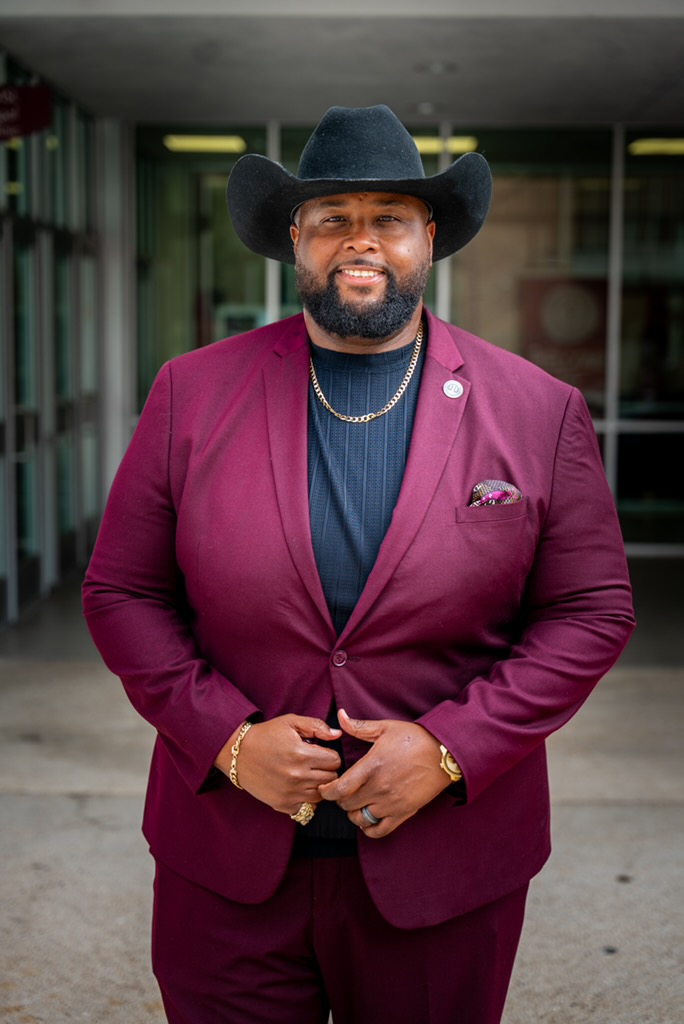
Houston Fraud & Civil Recovery Attorney
BJ Kemp
Texas State Bar #24116608 · Texas Legal Giants · Houston, TX
BJ Kemp breaks down federal fraud cases on the Texas Legal Giants channel because the same schemes reach Houston phones every day — and because most victims never call anyone. If someone induced you to send money on a lie, there is a four-year civil window under Texas law and a real path to recovery through the Texas Theft Liability Act’s fee-shifting provision. The first call is free, and nobody in this office is going to make you feel foolish for picking up the phone.
(346) 971–7333 — Free Case Review