
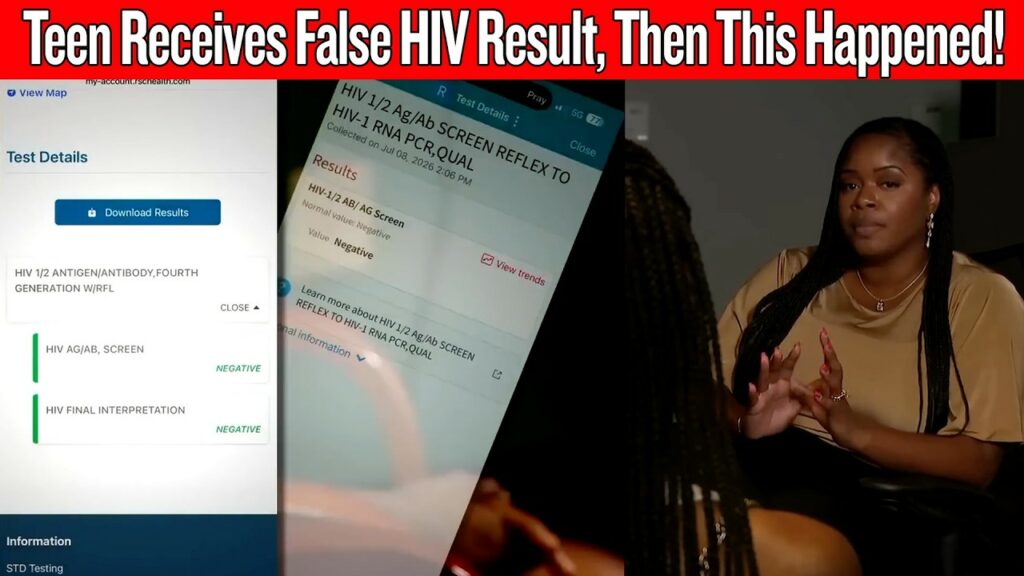
A DeKalb County, Georgia clinic told a teenage girl she was HIV positive through a patient portal app and never called to explain it — she found out alone and attempted suicide minutes later. The result was wrong, and if this happened in Texas, the clinic’s silence after the test, not the mistake itself, is what would expose it to a medical negligence claim.
BJ Kemp breaks down what happened in the video above, what Texas law would say about it, and why the damage cap on cases like this frustrates plaintiffs’ attorneys more than almost anything else in health care liability law.
What the Standard of Care Requires When a Clinic Delivers an HIV Result
The CDC’s own guidance is clear: a positive HIV result has to be delivered through a confidential, personal conversation — not left for a patient to discover alone on an app — and the provider must connect that patient with counseling and support immediately. That isn’t a courtesy. It’s the standard every licensed provider is measured against.
Texas law backs this up directly. Chapter 81 of the Texas Health and Safety Code treats HIV test results as confidential medical information requiring careful, consent-based handling, and Texas guidance calls for the same face-to-face conversation the CDC describes. When a clinic skips that step — when the first thing any human being tells a patient is nothing — that silence is a breach of the standard of care, not a technicality.
This Is Not a HIPAA Case — It’s a Medical Negligence Case
A lot of people watching this story assume it’s a HIPAA violation because the teenager found out through an app. It isn’t. HIPAA stops a clinic from handing your information to someone else without your permission — it does not stop you from viewing your own results on your own portal. She was allowed to see that screen.
The violation is what didn’t happen next: nobody called her, nobody explained the result, nobody offered support, and nobody scheduled a follow-up appointment. That’s patient abandonment at the exact moment a person needs guidance the most, and abandonment like that is negligence, plain and simple.
Did a Texas Clinic Mishandle Your Test Results?
The 120-day expert report deadline starts the moment a lawsuit is filed — don’t wait to talk to an attorney.
(346) 971-7333 — Free Case Review
What Kind of Legal Claim This Would Be in Texas
If this happened in Texas, it would fall under what the state calls a health care liability claim, defined in Chapter 74 of the Texas Civil Practice and Remedies Code, Section 74.001. The Texas Legislature built these cases to be difficult on purpose, and the very first hurdle trips up more families than anything else in the process.
The 120-Day Expert Report Deadline
Under Section 74.351, a family has to serve an expert report — a licensed physician willing to state in writing that the clinic broke the standard of care and that the breach caused the harm — within 120 days of the clinic filing its answer in the lawsuit. Miss that deadline by even a single day, and the case gets dismissed with prejudice, and the family can end up owing the clinic’s attorney’s fees. This is exactly why a case like this cannot sit untouched for months while a family tries to work things out with a clinic’s front desk.
Mental Anguish Damages — Why They Count, and Where the Line Is Drawn
Texas does not let someone sue purely for emotional distress on its own — that’s been the rule since the Texas Supreme Court’s 1993 decision in Boyles v. Kerr. Mental anguish has to attach to an actual underlying claim, like negligence. Here, the underlying claim exists: the failure to properly deliver and follow up on the test result. That means the teenager’s mental anguish, including everything she went through after seeing that result alone, becomes part of what a jury can weigh as damages inside the negligence claim.
Boyles v. Kerr (1993)
This case established that mental anguish is not a standalone lawsuit in Texas — it has to ride on top of a recognized legal claim such as negligence, which is why identifying the underlying negligence claim matters so much in cases like this one.
Providence Health Center v. Dowell (2008)
The Texas Supreme Court addressed a similar foreseeability question in this case, where a patient attempted suicide after being released from an emergency room. The court ruled that a suicide attempt is not automatically an unforeseeable event that breaks the chain of legal responsibility — but it still ruled against the family because 33 hours passed between the hospital’s conduct and the suicide attempt, a gap the court found too long to hold the hospital responsible. Compare that to the DeKalb County case: the teenager attempted to take her own life minutes after seeing the result, with zero follow-up from the clinic — a timeline that makes a foreseeability argument far stronger than the one that failed in Dowell.
The Damage Cap Nobody Tells You About
Here is the part that frustrates plaintiffs’ attorneys more than almost anything else in Texas health care law: even if a jury hears the entire story and wants to make it right, Section 74.301 caps noneconomic damages — pain, suffering, and mental anguish — at $250,000 per health care provider, and up to $500,000 total if multiple institutions are involved. That cap does not move based on how severe the facts are. It is the same number whether the mistake was minor or whether a teenager attempted suicide because of it.
What is not capped is economic damages — medical bills, therapy costs, and anything else with a receipt attached. And if a family can show the clinic’s conduct rose above ordinary negligence to something closer to conscious indifference — which is exactly what a pattern of “dozens of online complaints” alleging misdiagnosis and lost samples could support — that can open the door to a separate claim for exemplary damages under Chapter 41 of the Texas Civil Practice and Remedies Code, which carries its own standard and its own cap.

What to Do if This Happens to You
Get Independent Testing Immediately
Have the test repeated at a different facility, the way this mother did — four separate facilities confirming the same result is exactly the documentation that makes or breaks a claim like this later.
Request Your Complete Medical Records in Writing
Request your full medical records and portal history, including timestamps. When the result was posted, and when — if ever — anyone from the clinic called, matters enormously to your claim.
Document Everything While It’s Fresh
Write down every call you made, every call you didn’t get back, and every date. If you find a pattern of complaints against the same provider, save and date each one.
Don’t Wait to Talk to an Attorney
Texas gives you two years under Section 74.251 to file, but that clock starts running immediately, and the 120-day expert report deadline once a suit is filed means you need an attorney evaluating your case early — not after months of trying to resolve it with the clinic’s front desk. The wrong result is not the claim. The silence afterward is the claim.
If you or someone you know is struggling with thoughts of suicide, call or text 988 to reach the National Suicide & Crisis Lifeline, available 24/7.
Frequently Asked Questions
Is a clinic not calling about a false HIV result a HIPAA violation?
No. HIPAA protects your information from being disclosed to someone else without your consent — it does not prevent you from viewing your own results on a patient portal. The legal issue is the clinic’s failure to follow up, explain the result, and offer support, which is a medical negligence claim, not a privacy claim.
How long do I have to file a medical malpractice claim in Texas?
Section 74.251 of the Texas Civil Practice and Remedies Code gives you two years from the date of the negligent act to file a health care liability claim. Once a lawsuit is filed, you also face a separate 120-day deadline under Section 74.351 to serve an expert report, so early legal review is critical.
What is the cap on damages in a Texas medical malpractice case?
Section 74.301 caps noneconomic damages — pain, suffering, and mental anguish — at $250,000 per health care provider, up to $500,000 if multiple providers are involved. Economic damages, such as medical bills and therapy costs, are not capped.
Can a family recover damages for a suicide attempt after a medical error?
It depends on foreseeability. In Providence Health Center v. Dowell (2008), the Texas Supreme Court held that a suicide attempt is not automatically unforeseeable, but ruled against the family because 33 hours had passed between the hospital’s conduct and the attempt. A shorter timeline between the negligence and the attempt strengthens a foreseeability argument.
What is an expert report and why does it matter so much?
An expert report is a written statement from a qualified physician confirming that a health care provider breached the standard of care and that the breach caused harm. Texas law requires it be served within 120 days of the provider’s answer under Section 74.351 — missing that deadline results in dismissal with prejudice and can make the family liable for the provider’s attorney’s fees.
Sources & Further Reading

Your Houston Medical Malpractice Attorney
BJ Kemp
Texas State Bar #24116608 · Texas Legal Giants · Houston, TX
When a health care provider fails to deliver test results the right way, the damage often runs deeper than the misdiagnosis itself. BJ Kemp has spent his career holding negligent providers accountable under Texas’s strict health care liability laws, guiding families through the tight expert-report deadlines these cases demand. If a Texas clinic mishandled your care, he can tell you exactly where you stand.
(346) 971–7333 — Free Case ReviewLearn more about medical malpractice claims in Houston or explore our full Texas personal injury practice.