
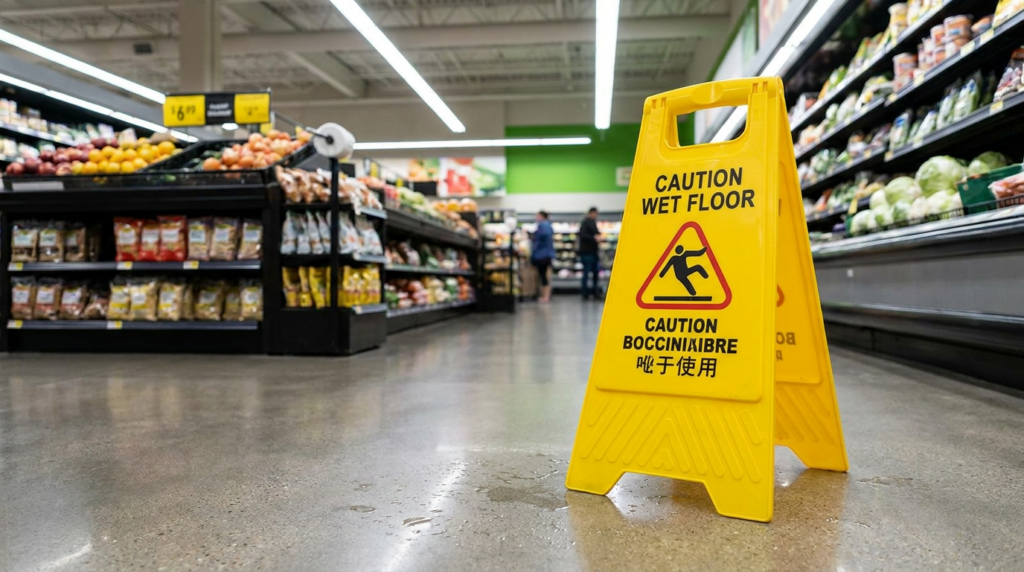
Every year, thousands of Texans are injured by slip and falls in stores, restaurants, and other businesses. What you do in the first hours after a fall can make the difference between a strong legal claim and a dismissed case. Here is exactly what to do.
Step 1: Get Medical Attention Immediately
Your health comes first. Call 911 or go directly to an emergency room or urgent care. Even if you feel okay, many serious injuries — including spinal injuries and internal bleeding — are not immediately apparent. Delayed symptoms are common with slip and fall accidents. Documenting your injuries through medical records also creates a critical paper trail for your legal claim.
Step 2: Report the Incident to the Store
Before leaving, notify store management and request that an incident report be filed. Ask for a copy. If they refuse to give you one, note the name of the manager you spoke with and the time. This report establishes that the accident occurred on their premises.

Step 3: Document Everything at the Scene
If you are physically able, use your phone to photograph:
- The hazard that caused your fall (spill, wet floor, uneven surface, broken display)
- The absence of warning signs — or the placement of signs relative to where you fell
- Your injuries (visible bruising, cuts, swelling)
- The surrounding area showing foot traffic, lighting conditions, and store layout
Get the names and phone numbers of any witnesses. Ask if anyone saw the hazard before your fall — this helps prove the store had notice of the dangerous condition.
Step 4: Request Preservation of Surveillance Video
This is critical. Most stores record 24/7, but footage is routinely overwritten within 24–72 hours. Ask management in writing to preserve all surveillance footage of the incident and the surrounding area. An attorney can send a formal spoliation letter demanding preservation. If the store destroys footage after receiving notice, that can be used against them in court.

Texas Premises Liability Law
Texas recognizes three categories of visitors. Store customers are invitees — the highest category — and property owners owe them a duty to regularly inspect the property, discover dangerous conditions, and either repair them or provide adequate warning. Under Texas law (see Tex. Civ. Prac. & Rem. Code § 95.001 and related case law), you must prove the owner knew or should have known about the hazard through reasonable inspection.
Step 5: Do Not Give a Recorded Statement
The store’s insurance company will contact you quickly, often within 24 hours, and ask for a recorded statement. Do not give one without an attorney. Adjusters are trained to ask questions designed to shift blame to you or minimize the severity of your injuries. Politely decline until you have legal representation.
Frequently Asked Questions
Texas gives you two years from the date of your fall to file a personal injury lawsuit under Tex. Civ. Prac. & Rem. Code § 16.003. Missing this deadline almost always means losing your right to compensation entirely, so act quickly.
You must prove the property owner (1) knew or should have known about the hazardous condition, (2) failed to fix it or warn you, and (3) their negligence caused your injuries. Texas follows an invitee/licensee framework — store customers are invitees and receive the highest duty of care.
No. First offers from retailers and their insurers are almost always far below the true value of your claim. Once you accept a settlement and sign a release, you give up all future claims — even if your injuries turn out to be more serious than initially thought.
Texas’s modified comparative fault rule still allows you to recover if you were 50% or less at fault. Your damages are reduced by your percentage of fault. Don’t assume that because you contributed to the fall you have no case — let an attorney evaluate it.
The most critical evidence is surveillance video (request it immediately — stores often overwrite footage within 24–72 hours), the incident report, photos of the hazard and your injuries, witness contact information, and your medical records. An attorney can send a spoliation letter to preserve evidence the store might otherwise destroy.
Sources & Further Reading

Your Houston Personal Injury Attorney
BJ Kemp
Texas State Bar #24116608 · Texas Legal Giants · Houston, TX
BJ Kemp has built Texas Legal Giants on a simple promise: Big Commitment. Giant Results. He handles personal injury cases throughout greater Houston — slip and fall, car accidents, wrongful death, and more — and fights for injured Texans to recover every dollar the law allows.