
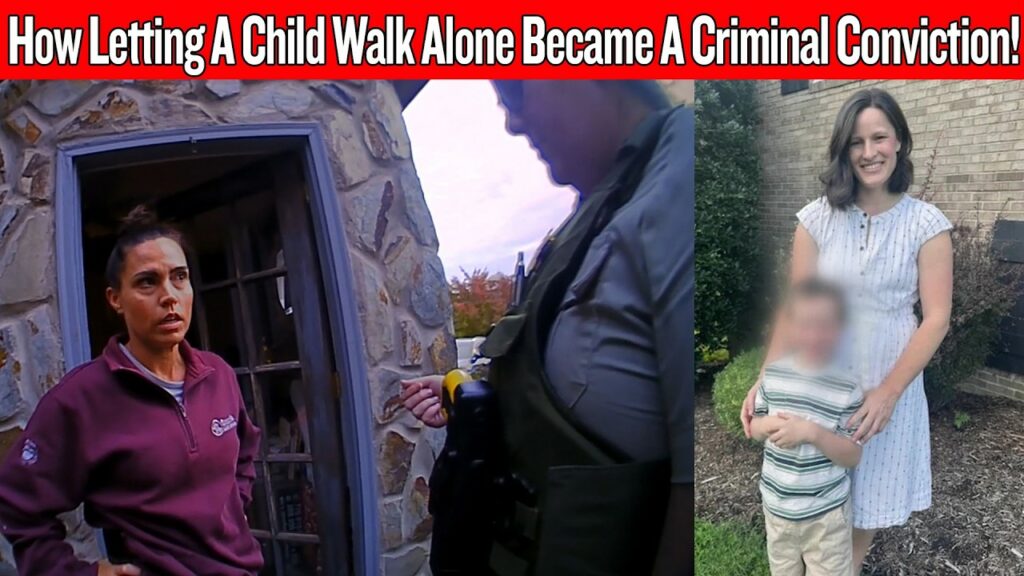
A five-year-old in Williamsburg, Virginia walked about half a mile inside his own gated community to collect goose feathers, and a security guard walked him home. His mother now has a six-month suspended jail sentence and seven years on the state child abuse and neglect registry. Texas passed a law in 2021 that was supposed to make exactly this impossible here — and there is a hole in it that most Texas parents have never heard of.
The short version: Texas fixed the CPS definition of neglect. It never touched the criminal statute. Two different chapters, two different agencies, two different doors — and the 2021 reform only closed one of them.

What Actually Happened to Carrie Ann Parkinson
In June, Parkinson let her kindergartner, Sam, walk a winding path in their gated community to a pond to pick up goose feathers. She knew the route crossed a street and passed water. She considered it safe because he knew the area well and because, as she put it, it is a neighborhood where children play outside alone. “I didn’t send him to play at the pond,” she said. “I sent him down the path that happens to go past the pond to collect goose feathers.”
A knock at the door, then a warrant
A community security guard spotted Sam and brought him home. “I get this knock on the door and there’s my son with a handful of feathers and a scared look on his face with the security guard standing behind him,” Parkinson said. The guard called police. Police served her with an arrest warrant. Child Protective Services opened a case. The result was a six-month suspended sentence and seven years of registry listing over a half-mile walk.
The bitter detail: Virginia already had the law
Virginia unanimously passed a reasonable childhood independence law in 2023. Parkinson — herself an attorney, whose conviction now puts her law license at risk — had worked for one of that bill’s co-sponsors while she was in law school. So how did the prosecution happen? They did not charge her with child neglect at all. They charged contributing to the delinquency of a minor: different chapter, different statute, and the reasonable-independence protection simply did not reach it.
That is the entire lesson. The legislature closes one door and prosecutors walk through a different one. Texas has the same two doors.
Door One: Family Code § 261.001, the Shield HB 567 Built
In 2021, House Bill 567 rewrote the definition of neglect in Texas Family Code § 261.001 — the definition CPS is required to use. Two things changed, and both are significant.
The standard went from “substantial risk” to “immediate danger”
Neglect now means an act or failure to act evidencing “blatant disregard for the consequences” that “results in harm to the child or that creates an immediate danger to the child’s physical health or safety.” Hypothetical danger no longer qualifies. “Something could have happened” is not neglect in Texas. A walk around the park or a bike ride around the block does not meet that bar, and the legislature wrote it that way deliberately.
Independent activities are expressly carved out
Section 261.001(4)(B)(ii) states outright that neglect does not include “allowing the child to engage in independent activities that are appropriate and typical for the child’s level of maturity, physical condition, developmental abilities, or culture.” If a caseworker knocks because your child was outside alone, that sentence is your shield. Know the citation by heart.
Has CPS opened a case on your family?
Call before the interview, not after it. The first call is free.
(346) 971-7333 — Free Case ReviewDoor Two: Penal Code § 22.041, Which HB 567 Never Touched
Here is the part that matters most. Family Code § 261.001 governs CPS. It does not define a crime. Crimes live in the Penal Code, and Texas Penal Code § 22.041 — abandoning or endangering a child — contains no independent-activities carve-out and was not amended by HB 567. Under § 22.04(c)(1), “child” here means a person 14 years of age or younger.
Abandonment under subsection (b)
If you have care, custody, or control of a child and intentionally abandon them in any place under circumstances exposing them to an unreasonable risk of harm, the floor is a state jail felony — 180 days to 2 years in state jail plus up to a $10,000 fine, if you intended to return. Abandon without intent to return and it becomes a third-degree felony: 2 to 10 years. If a reasonable person would believe the circumstances placed the child in imminent danger of death or bodily injury, § 22.041(e) escalates it to a second-degree felony: 2 to 20 years.
Endangerment under subsection (c) — the low bar
Subsection (c) covers anyone who “intentionally, knowingly, recklessly, or with criminal negligence, by act or omission, engages in conduct that places a child…in imminent danger of death, bodily injury, or physical or mental impairment.” It is a state jail felony. Note two words: omission means not doing something can be the crime, and criminal negligence is the lowest mental state in Texas Penal Code § 6.03(d) — the State never has to prove you meant anything, only that you “ought to be aware of a substantial and unjustifiable risk” and were not.
There is no magic age in Texas
Parents swear there is a statute saying 8 is illegal and 12 is fine. There isn’t one. No Texas statute sets a minimum age for leaving a child home or letting a child walk alone. Everything turns on the facts: the specific child, the specific route, the specific day. That cuts both ways, which is why the record you build in the first 24 hours matters so much.
Your Playbook When a Caseworker Knocks
Almost all of this is about what does — and does not — come out of your mouth.
- Step outside and close the door behind you. Be polite and calm. You do not have to let anyone into your home without a warrant or a court order.
- Ask exactly two questions. “Is this an investigation?” and “Am I being accused of anything specific?” Then listen. Do not fill the silence.
- Do not give a statement, and do not sign a safety plan on the spot. This is where good parents destroy themselves, precisely because they know they did nothing wrong.
- Write the timeline that same night. Times, distances, weather, who else was outside, who was home. Photograph the route your child took.
- Get names and call a lawyer that day — not after the interview, not after the follow-up visit.
The finding often outlasts the case
Parents focus on the criminal charge, but the CPS finding is frequently the bigger long-term problem. Family Code § 261.002 requires the department to “establish and maintain a central registry of the names of individuals found by the department to have abused or neglected a child.” That registry gets checked for employment, schools, daycares, hospitals, fostering, adoption — sometimes just to chaperone a field trip. A suspended sentence means no jail time. The registry does not care.
Seven years of a mother’s life, over a handful of goose feathers. If CPS has opened a case or you are facing a child endangerment charge in Texas, call a lawyer first and talk to the investigator second. BJ Kemp takes these cases in Houston and the surrounding counties, and the first call is free.
Frequently Asked Questions
What age can a child stay home alone or walk alone in Texas?
There is no statutory minimum age in Texas. No statute says one age is illegal and another is acceptable. Both CPS and prosecutors evaluate the facts of the specific situation — the child’s maturity, the route, and whether there was immediate danger under Family Code § 261.001 or imminent danger under Penal Code § 22.041.
Did Texas HB 567 make it legal to let my child play outside alone?
For CPS purposes, largely yes. House Bill 567 (2021) raised the neglect standard in Family Code § 261.001 from substantial risk to harm or immediate danger, and § 261.001(4)(B)(ii) expressly excludes allowing a child to engage in independent activities appropriate and typical for the child’s maturity, condition, abilities, or culture. It did not amend the Penal Code.
Can I be criminally charged in Texas for letting my child walk alone?
It is possible, because Penal Code § 22.041 was never amended by HB 567 and has no independent-activities exception. Endangerment under § 22.041(c) is a state jail felony punishable by 180 days to 2 years and a fine up to $10,000, and it can be proven on criminal negligence alone — the lowest mental state in Texas law.
What is the Texas child abuse central registry and how long does a name stay on it?
Texas Family Code § 261.002 requires the Department of Family and Protective Services to maintain a central registry of individuals found to have abused or neglected a child. It is checked for employment, school and daycare positions, hospital roles, fostering, and adoption. In the Virginia case that prompted this discussion, the mother was listed for seven years despite serving no jail time.
Do I have to let a CPS caseworker into my house in Texas?
Not without a warrant or a court order. You can step outside, close the door, and speak politely on the porch. You are also not required to give a statement or sign a safety plan on the spot. Ask whether it is an investigation and whether you are being accused of anything specific, then call an attorney the same day.
Sources & Further Reading
- Texas Family Code Chapter 261 — Investigation of Report of Child Abuse or Neglect
- Texas House Bill 567 (87th Legislature, 2021)
- Texas Penal Code § 22.041 — Abandoning or Endangering a Child
- Texas Penal Code § 6.03 — Definitions of Culpable Mental States
- Texas Department of Family and Protective Services — Child Protection

Your Houston CPS and Criminal Defense Attorney
BJ Kemp
Texas State Bar #24116608 · Texas Legal Giants · Houston, TX
A CPS finding can follow a parent for years after the criminal case is gone. BJ Kemp pushes the HB 567 independent-activities exclusion on the civil side, forces the State to prove imminent danger on the criminal side, and gets involved before the first recorded interview. Licensed in Texas and Michigan.
(346) 971–7333 — Free Case Review